The Checkerspot Caterpillars on Your Sunflowers: A Sign of Life, Not a Problem
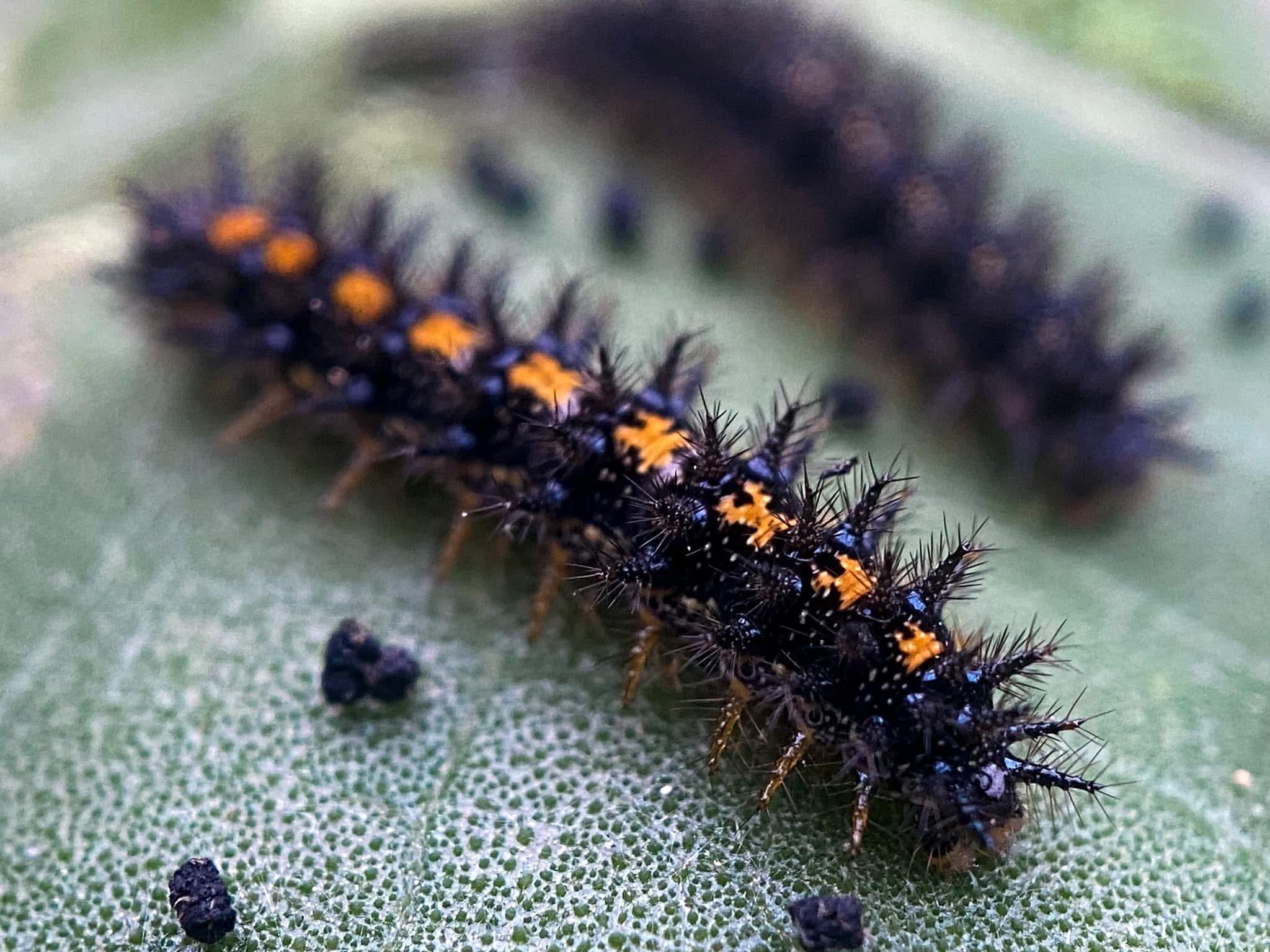
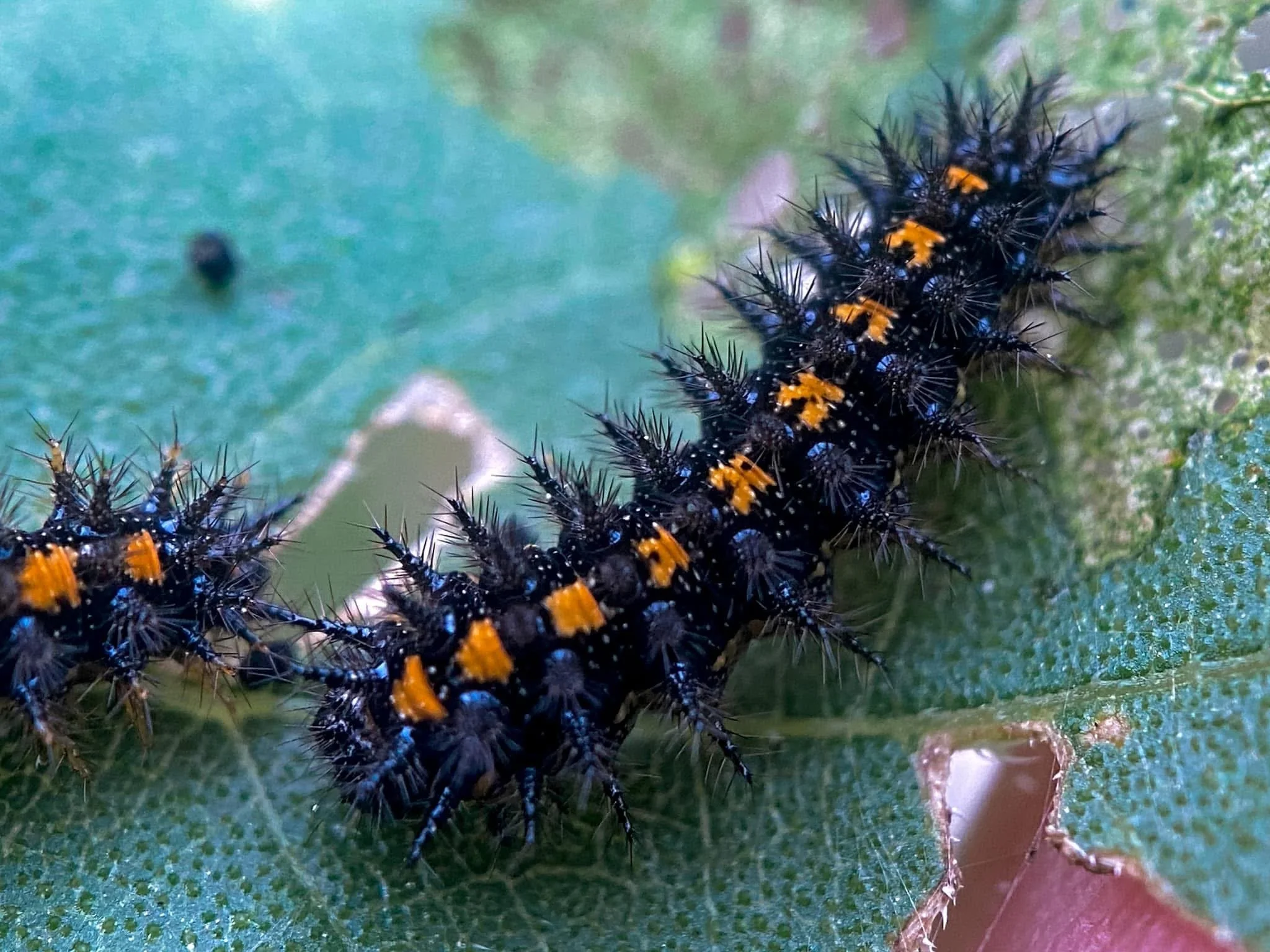
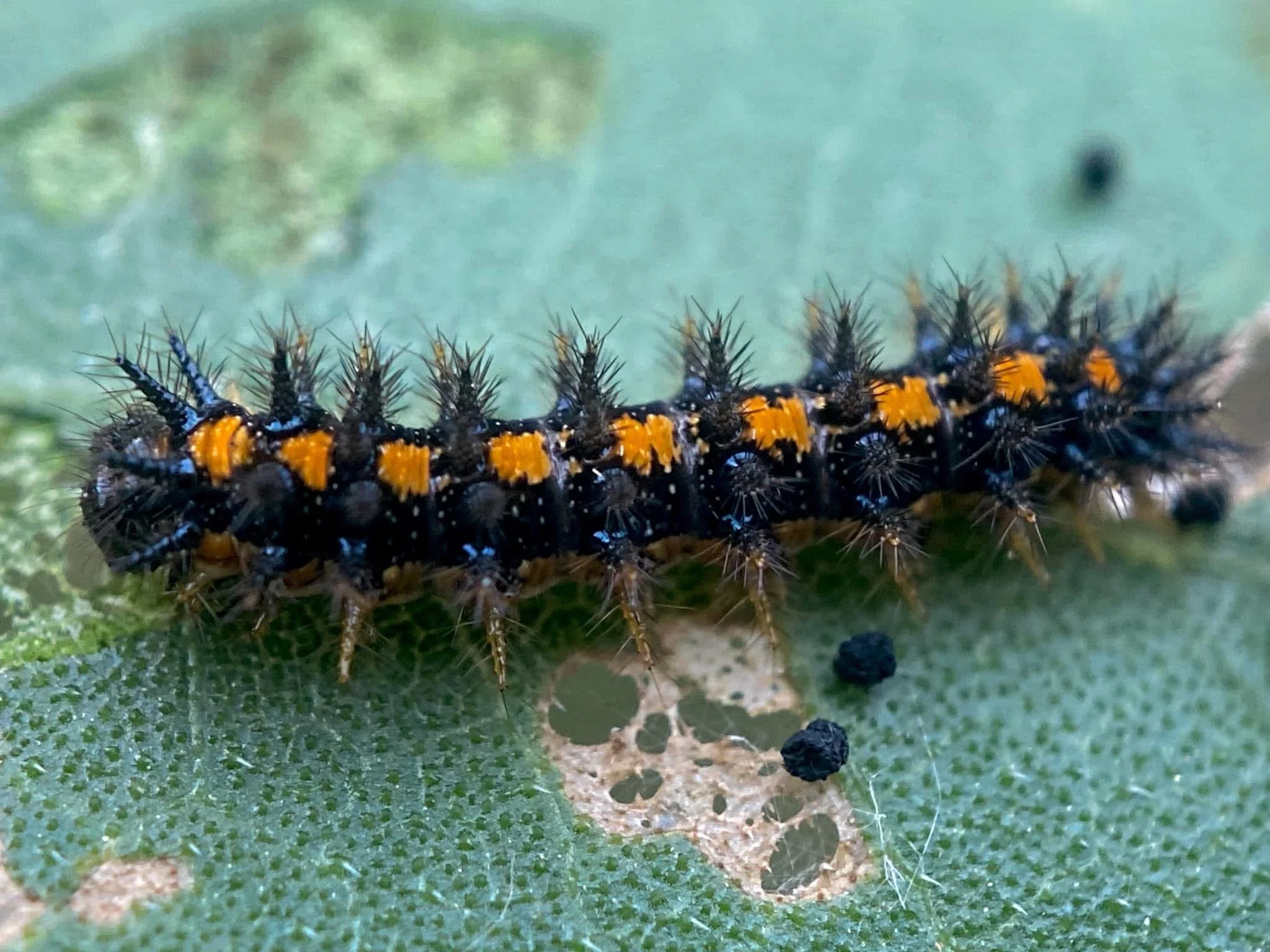
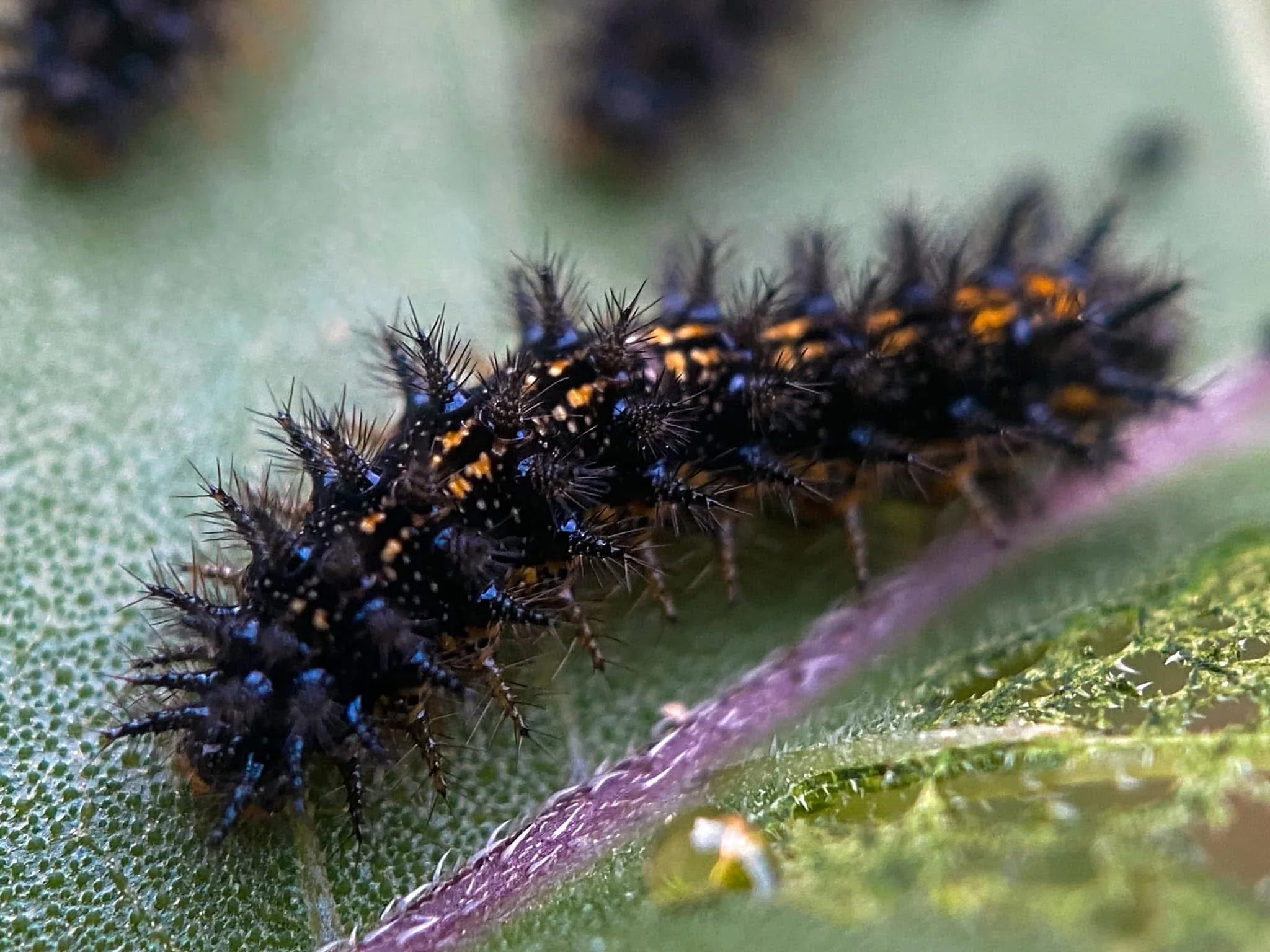
Sunflowers are the summertime royalty of the garden. They’re bold, cheerful, and beloved by pollinators of all kinds. But if you’ve ever noticed clusters of spiky, black caterpillars on your sunflowers and felt alarmed, you’re not alone. Many gardeners worry that their blooms are being destroyed by pests.
But here’s the good news:
Those caterpillars are checkerspot butterfly larvae, and they’re supposed to be there.
Let’s explore who they are, why they matter, and how you can turn worry into wonder.
Meet the Checkerspot Butterfly
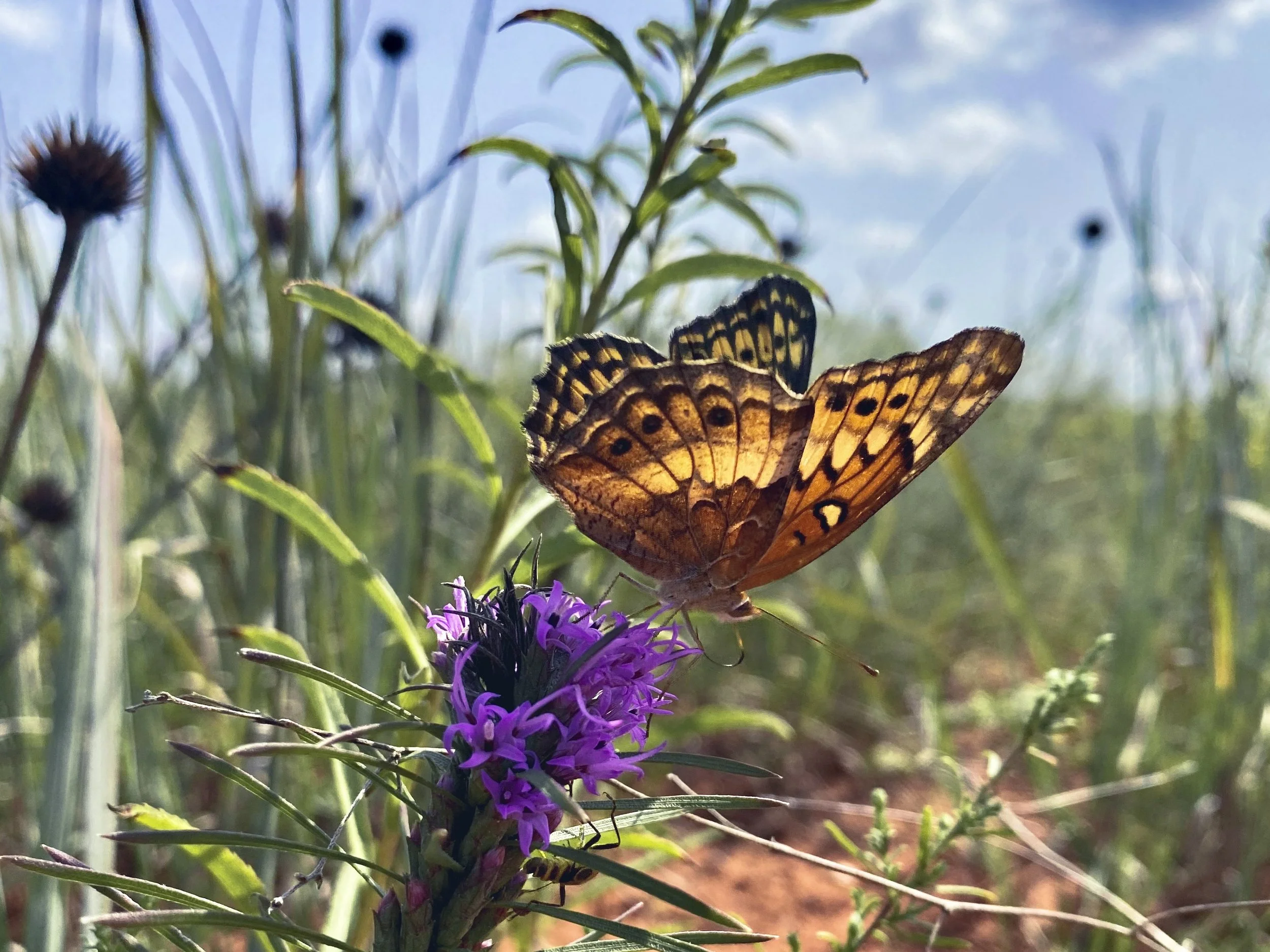
One of the most common species seen in Oklahoma gardens is the Silvery Checkerspot (Chlosyne nycteis). It’s a small, orange-and-black butterfly with white spots on its wings. It’s delicate, fast-moving, and often mistaken for a miniature monarch or fritillary.
As with many native butterflies, the checkerspot has a host plant: a specific plant its caterpillars must eat in order to survive and transform. In this case, that host plant is sunflowers, along with rudbeckia (black-eyed Susans) and other native members of the Aster family.
The Caterpillar Stage: Spiky, Not Harmful
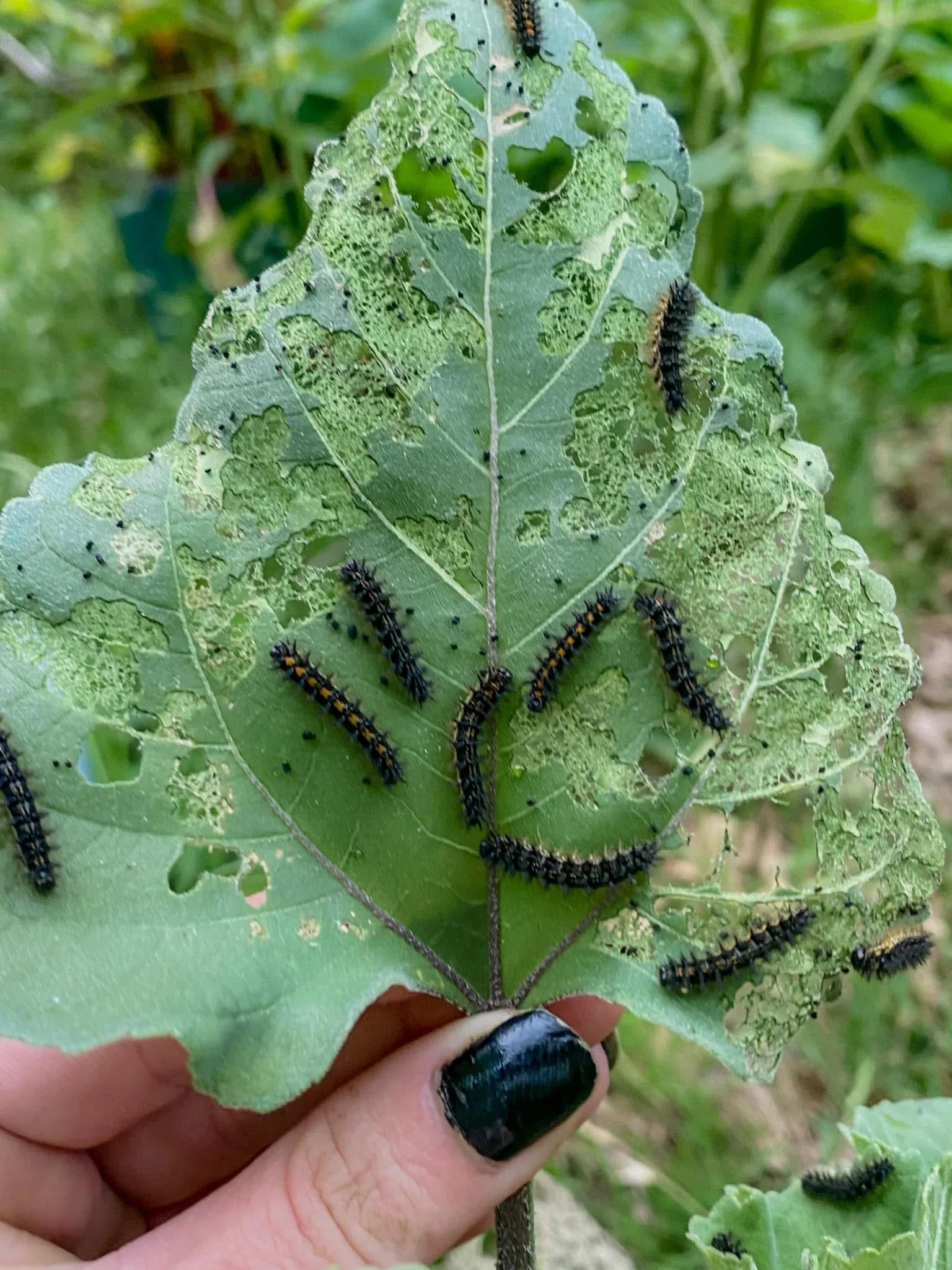
Checkerspot caterpillars are small, black, and bristly with orange markings. You’ll often find them clustered together on the undersides of sunflower leaves, chewing in groups.
It may look like they’re doing a lot of damage, but rest assured, they’re not killing the plant. They feed mainly on older leaves and rarely do lasting harm to healthy sunflowers. In fact, their presence is a sign of a healthy native ecosystem.
Where there are caterpillars, there will soon be butterflies…
These larvae are part of a vital food web that provides nourishment for birds and transforms into adult butterflies that help pollinate your garden and wild spaces.
Why It’s Important to Let Them Be
Native caterpillars like the checkerspot are disappearing in many areas due to habitat loss, pesticide use, and the overuse of non-native ornamentals in landscaping. By allowing them to feed and complete their life cycle in your garden, you’re directly supporting local biodiversity.
Plus, butterflies don’t just appear out of thin air, they start with hungry babies.
Here’s why leaving those caterpillars alone matters:
• Bird food: 96% of terrestrial birds feed their young caterpillars.
• Pollinator support: Every caterpillar that survives becomes a butterfly that helps pollinate.
• Conservation: Native insects depend on native plants and tolerant humans to survive in today’s world.
How to Garden in Harmony with Native Insects
At Oklahoma Wildflower Market, we believe gardens should be alive, not pristine. That means making space for the whole life cycle of native pollinators, even the slightly messy bits.
Here are a few ways to support checkerspots and other butterfly species:
1. Plant native sunflowers like Helianthus annuus, Helianthus maximiliani, and other Aster family members.
2. Avoid pesticides, especially systemic ones like neonicotinoids, which harm all pollinators.
3. Let the leaves be, even if some look chewed. They’ll grow back, and the pollinators will thank you.
4. Leave stems and leaf litter in winter, where many native insects overwinter.
A chewed leaf is not a flaw; it’s a sign that your garden is feeding the world…