Kinship Meditation: Cultivating Compassion for the Living World
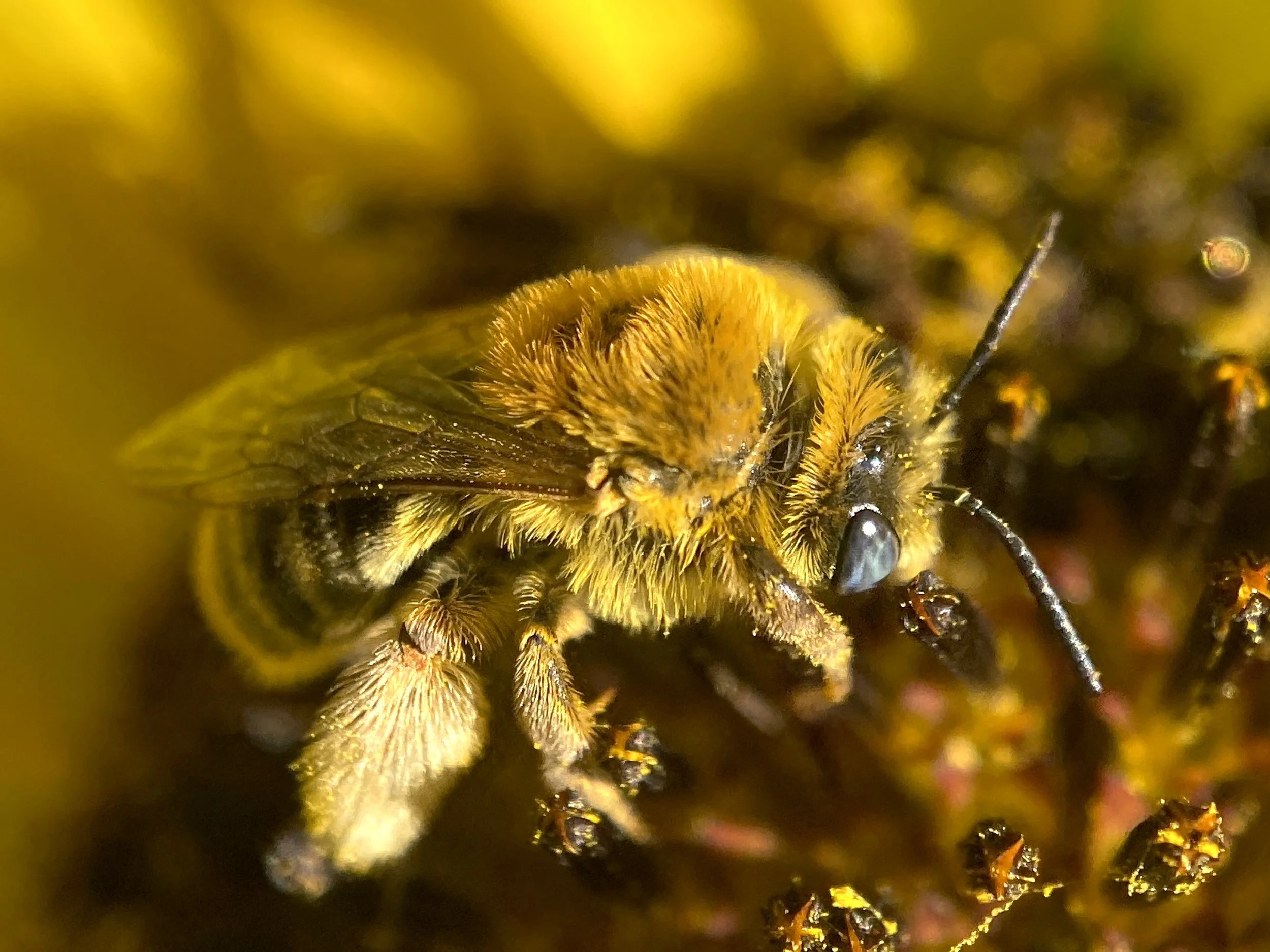
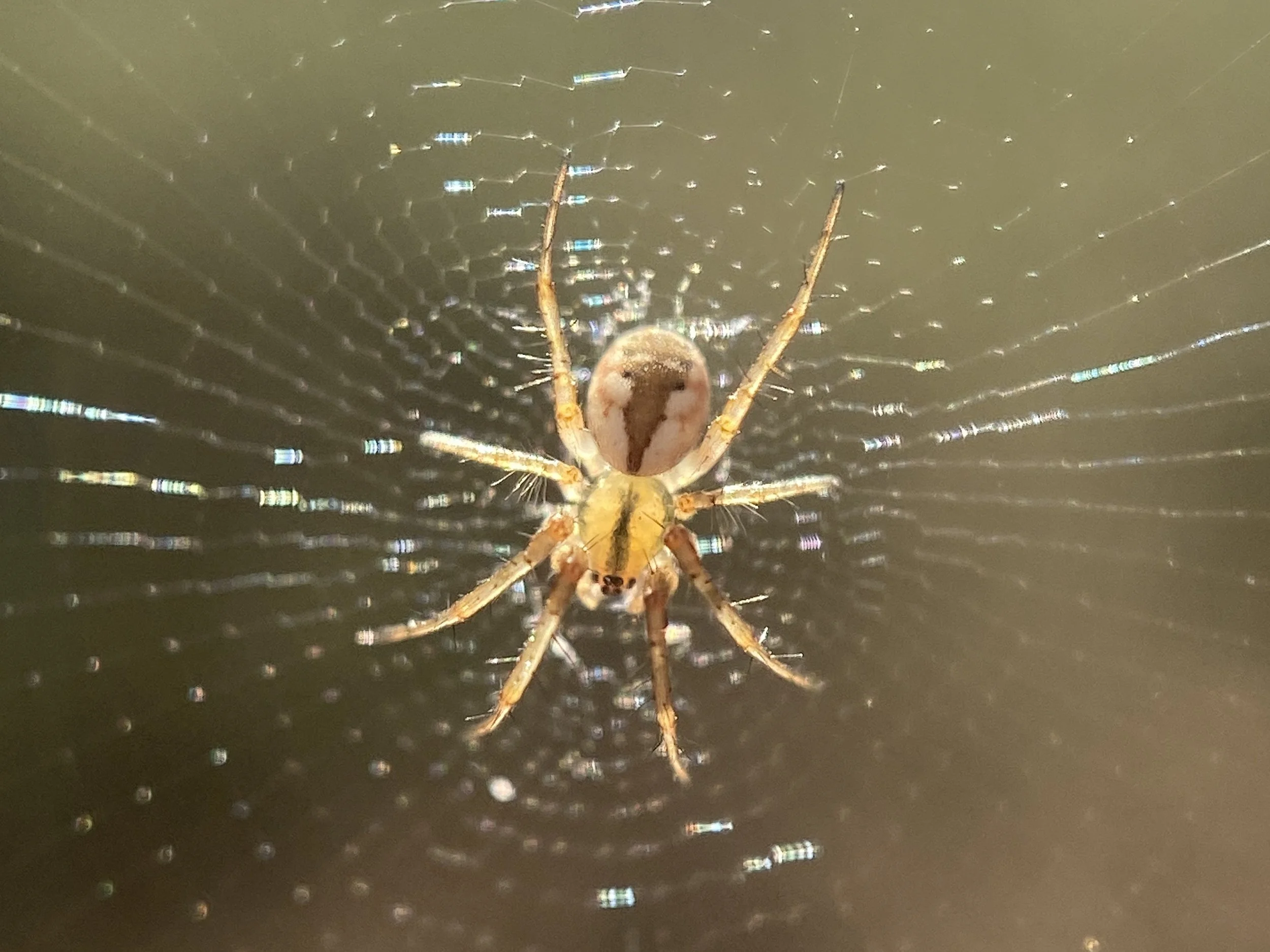
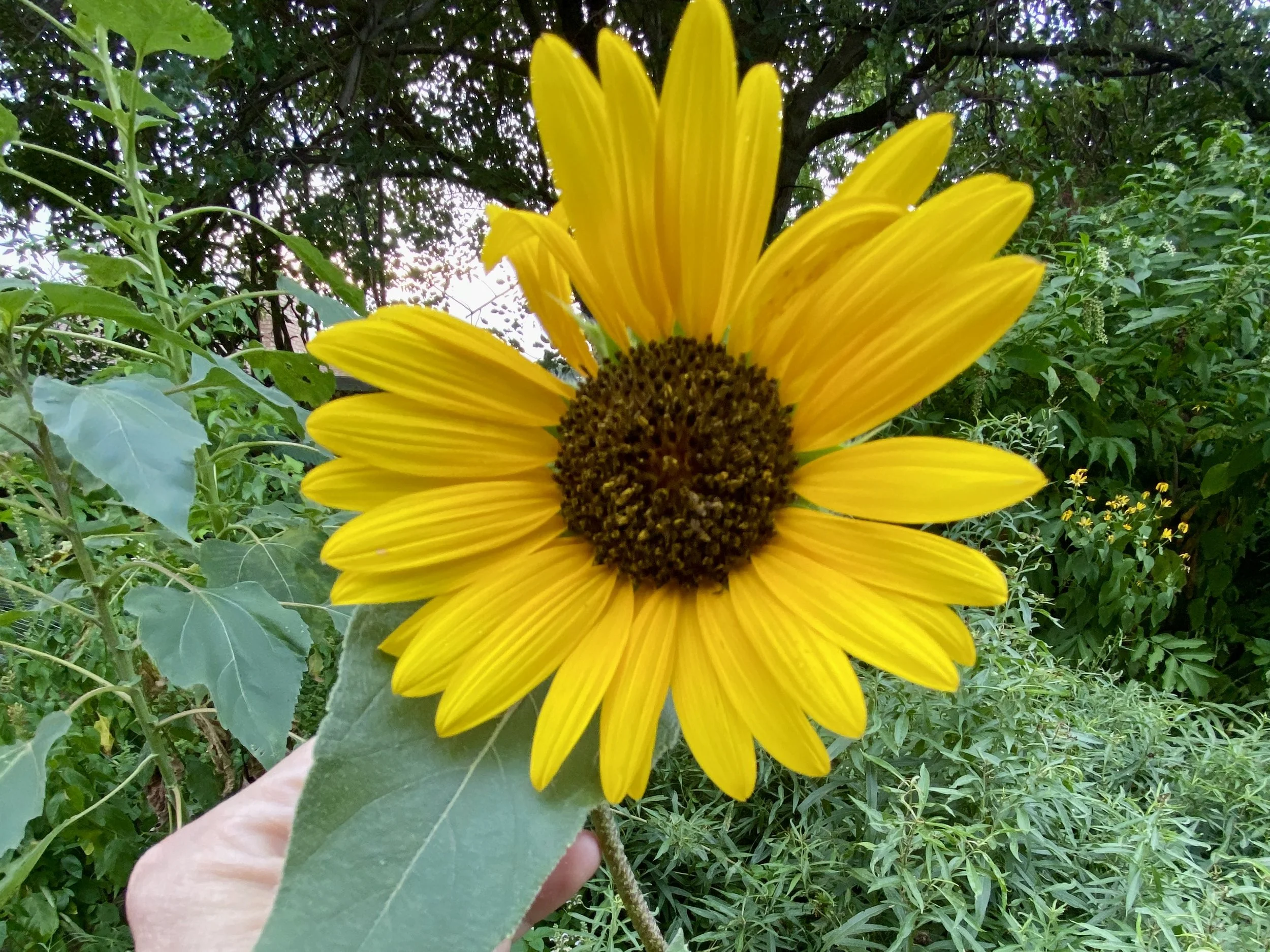
A fuzzy bee disappears into the yellow center of a flower… A tiny spider repairs her web after rain… Somewhere beneath our feet, fungi thread their way through soil while roots search through darkness for water… Sunflowers are turning sunlight into sugar… Most of this happens without our attention.
We move through a world crowded with lives, yet it’s remarkably easy to experience nature as simply scenery: something beautiful outside the window, someplace we visit on weekends, or a collection of resources surrounding our human world.
But we are not surrounded by nature.
We are inside it.
Kinship Meditation is a contemplative practice built around that simple recognition. It combines mindfulness, careful observation, compassion, and ecological understanding to help us experience other living beings not merely as objects in our environment, but as fellow participants in the living world.
Its purpose is not to romanticize nature or pretend that humans and other species are the same. A beetle doesn’t experience the world as we do. Neither does an oak tree, a coyote, a prairie grass, or a mushroom.
Kinship doesn’t require sameness. Instead, it asks us to recognize relationship.
The Distance Between Knowing and Feeling
Most of us already know intellectually that humans are a part of nature.
We know that the oxygen entering our lungs comes largely from photosynthetic organisms. We know that plants capture energy from sunlight, that insects pollinate flowers, and that fungi and microorganisms help cycle nutrients through ecosystems, and that every meal we eat ultimately depends upon ecological relationships.
We know these things.
But knowing something intellectually and experiencing it emotionally are very different things.
Modern life makes that separation particularly easy. Food appears packaged on shelves. Water arrives through faucets. Temperature changes at the touch of a thermostat. And, many of us can spend entire days moving between houses, cars, offices, stores, and screens while encountering surprisingly little of the more-than-human world.
Nature can begin to feel like something “out there”.
Researchers use terms such as “nature connectedness” or “nature relatedness” to describe the degree to which people experience a sense of relationship with the natural world. This isn’t simply a measure of how often someone hikes or visits a park. It includes something more internal: whether a person experiences nature as meaningful, emotionally significant, and part of their sense of self.
Research suggests that this matters.
A meta-analysis involving more than 13,000 participants found a significant positive relationship between connection to nature and pro-environmental behavior. People who felt more connected to nature were also more likely to report behaviors that protected it. (PubMed Central (PMC))
Another meta-analysis found a smaller but significant relationship between nature connectedness and measures of happiness, including positive emotion, vitality, and life satisfaction. (PubMed)
The implication is quietly profound:
Our relationship with the living world may influence how we care for it.
Information matters. Science matters. Environmental education matters enormously.
But perhaps conservation also requires relationship.
We tend to protect what we have learned to notice.
And we tend to love what we have learned to know.
Meditation as a Practice of Relationship
Meditation is often presented as an inward practice.
We close our eyes. Follow the breath. Observe thoughts. Become aware of sensations in the body.
These practices can be valuable. But awareness doesn’t have to stop at the boundary of our skin.
We can turn attention outward.
Meditation can become a way of practicing relationship.
Research on compassion and loving-kindness meditation suggests that contemplative practice can influence how people relate to others. A systematic review and meta-analysis of randomized controlled trials found small-to-medium effects of meditation practices on empathy, compassion, and prosocial behaviors. (PubMed)
Kinship Meditation asks an ecological question:
What happens when we intentionally extend that circle of attention and compassion beyond our own species?
Instead of meditating only on our breath, we might meditate beside a tree and contemplate its respiration alongside our own.
Instead of noticing birdsong merely as pleasant background noise, we might listen closely enough to remember that the sound is communication between living beings.
Instead of looking at an insect and immediately deciding whether it is beautiful, ugly, beneficial, or bothersome, we might become curious about the life unfolding before us.
What does this creature need?
What does it perceive?
What relationships sustain it?
What role does it play here?
We may not know the answers. Often we won’t.
The question itself changes the quality of attention.
Attention Is the Beginning of Kinship
Imagine sitting quietly beside a patch of native flowers.
At first you see flowers.
Stay longer…
Soon there are individual species. Different shapes. Different stages of bloom. Leaves damaged by herbivores. Seeds beginning to form.
Then movement appears.
A bee lands.
Another insect crawls beneath a leaf.
A tiny spider waits almost invisibly between petals.
A bird calls somewhere beyond your sight.
Wind moves through stems.
The longer you pay attention, the more the landscape seems to populate itself.
Of course, nothing suddenly arrived.
You became capable of noticing what was already there.
This is one of the gifts of contemplative naturalism. Attention increases resolution.
A patch of vegetation becomes a community.
A tree becomes habitat.
A fallen log becomes architecture for fungi, beetles, mosses, microbes, and countless other organisms.
The world becomes less empty.
And perhaps that is one reason attention can become an ethical practice.
It is difficult to care deeply about an abstraction called biodiversity. It is easier to understand what biodiversity means after watching a leafcutter bee carefully carry a circle of leaf beneath her body, or discovering a caterpillar feeding on the plant you almost pulled from your garden.
Ecological knowledge gives us context.
Attention gives that knowledge intimacy.
The Science of Belonging
The idea that humans possess a tendency to seek relationships with other forms of life is sometimes discussed through the biophilia hypothesis, most famously associated with biologist E. O. Wilson.
The hypothesis proposes that because human beings evolved in intimate relationship with other organisms and landscapes, our attraction to living systems may have evolutionary roots. The details and strength of the hypothesis continue to be debated, but it has provided an influential framework for studying human relationships with nature. (ScienceDirect)
Whether or not every aspect of biophilia proves correct, one biological fact is indisputable:
Human beings didn’t evolve separately from the rest of life.
We are one branch of it.
Our bodies are built from elements that have circulated through countless organisms before us. Our lives depend upon photosynthesis, decomposition, pollination, soil formation, microorganisms, water cycles, and food webs.
Even breathing is an ecological exchange.
Inhale.
Oxygen enters the body.
Exhale.
Carbon dioxide leaves it.
The boundary between “self” and “environment” suddenly looks a little more porous.
We are continually exchanging matter with the world around us.
Kinship Meditation begins there: not with a supernatural claim, but with biological belonging.
A Simple Kinship Meditation
You don’t need the wilderness to practice this.
You simply need another living being.
A tree outside an apartment building will do. So will a pigeon on a sidewalk, moss between bricks, a houseplant, a moth resting beneath a porch light, or a weed growing through a crack in concrete.
Choose one living thing and spend several minutes simply observing it.
Notice your impulse to name it.
Then allow the name to become secondary.
Instead, notice form.
Texture.
Movement.
Color.
Behavior.
Notice where the organism meets its environment.
If it is a plant, consider sunlight traveling into its tissues. Consider water moving upward from the soil. Look for insects feeding, resting, hunting, or pollinating.
If it is an animal, watch without interfering. Notice what it appears to be doing. Feeding? Resting? Searching? Avoiding danger?
Then quietly consider:
This is a life.
It has an evolutionary history far older than any human civilization.
It participates in relationships I may never completely understand.
Its existence does not depend upon my noticing it.
And yet, for these few moments, our lives have intersected.
You do not need to manufacture a particular emotion.
Compassion cannot always be commanded into existence.
Just pay attention.
Curiosity is enough.
From Curiosity to Compassion
One of the dangers of talking about compassion for nature is making it sentimental.
Nature is not always gentle.
A parasitoid wasp lays eggs inside another organism. A hawk kills a rabbit. Drought kills seedlings. Disease moves through populations. Competition, predation, decomposition, and death are fundamental ecological processes.
Kinship asks us to love the living world without requiring it to become a children’s story.
Compassion can coexist with ecological realism.
Perhaps compassion begins not with believing every creature is adorable, but with recognizing that other organisms are pursuing lives of their own.
The spider wants nothing from us.
The prairie does not exist for our recreation.
The bee is not pollinating flowers as a favor to humanity.
They have their own ancient relationships.
When we begin to understand those relationships, the human world becomes one neighborhood within a much larger community.
What We Notice, We Begin to Protect
Conservation often focuses, necessarily, on numbers.
Acres protected.
Species lost.
Populations declining.
Degrees of warming.
Habitat fragmented.
Those numbers tell us what is happening.
But numbers alone cannot always tell us why we should care.
Relationship can.
Research linking nature connectedness with environmentally protective behavior suggests that conservation is not only a problem of knowledge. It may also be a problem of relationship. Across studies, people who report stronger connections with nature also tend to report more pro-environmental behavior. (PubMed Central (PMC))
That does not mean meditation will save an ecosystem.
It means that cultivating attention, curiosity, and affection for the living world may help create the emotional ground from which stewardship grows.
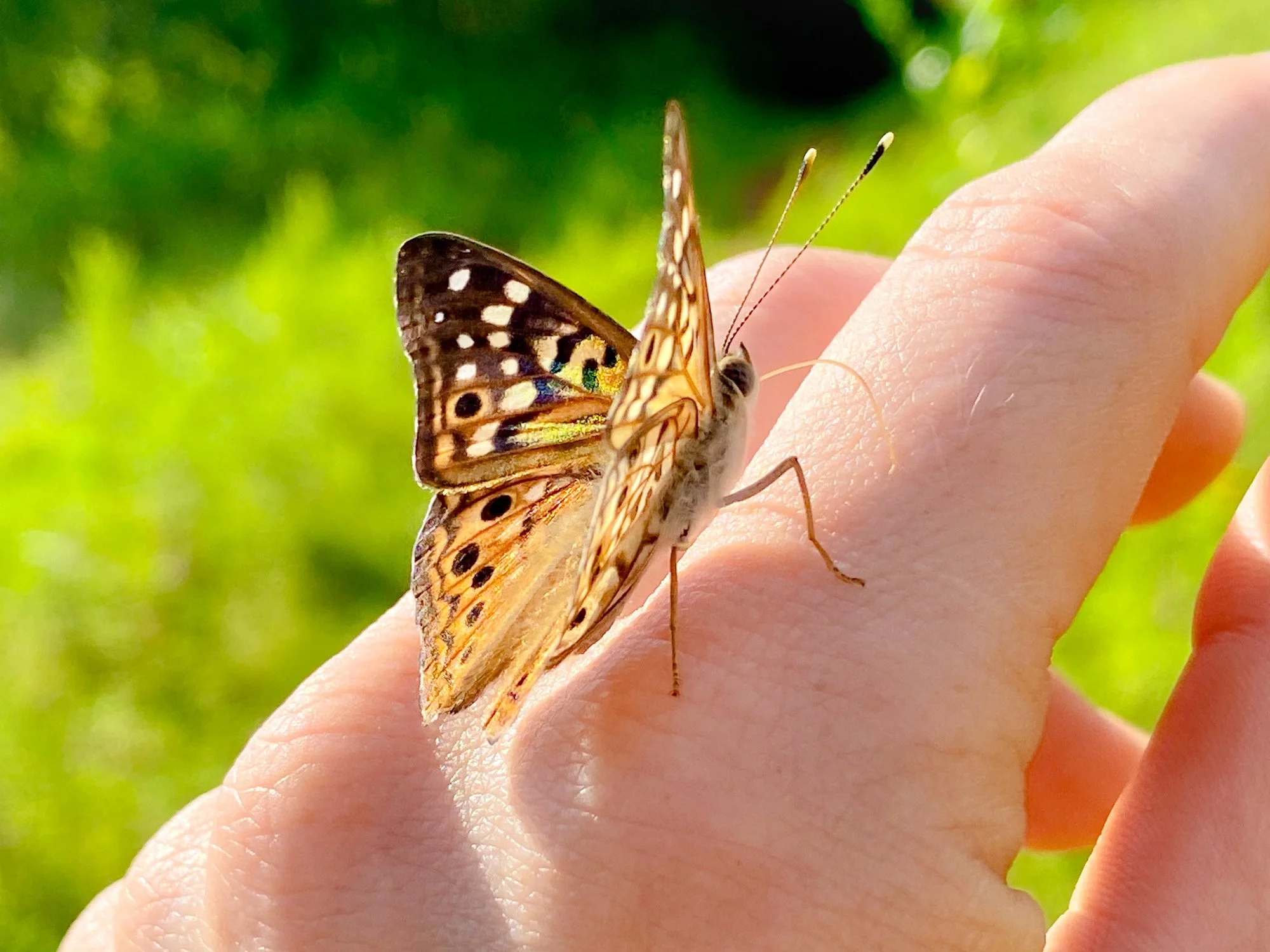
A child who learns the name of a butterfly may notice when it disappears.
A gardener who watches native bees visiting flowers may think differently about pesticides
Someone who discovers salamanders beneath fallen logs may begin to understand why dead wood belongs in a forest.
Knowledge creates meaning.
Relationship creates responsibility.
Expanding the Circle
Begin with one organism.
Then begin noticing relationships.
The flower and the bee.
The caterpillar and its host plant.
The oak and the fungi around its roots.
The bird and the insect.
The fallen leaf and the organisms returning it to soil.
Eventually, include yourself.
The water you drink.
The plants you eat.
The microorganisms living within you.
The trees shading your home.
The insects pollinating your garden.
The ancient photosynthetic organisms whose descendants continue producing much of the oxygen moving through your lungs.
The circle keeps widening until something curious happens.
There is no obvious place to draw the line around “nature.”
You were inside the circle all along.
A Practice of Remembering
Perhaps Kinship Meditation is ultimately less about learning something new than remembering something very old.
We belong to a living planet.
Not metaphorically.
Biologically.
Our lives are woven into systems far older and more intricate than ourselves. We are dependent, participating organisms in a world filled with other dependent, participating organisms.
Meditation gives us an opportunity to experience that truth slowly.
To sit beside another life.
To become curious.
To notice.
To learn.
And eventually, perhaps, to care more deeply.
Because the living world does not need us merely to admire it.
It needs us to remember that we belong to it.
And when the boundary between us and nature begins to soften, conservation becomes something more intimate than protecting a distant environment.
It becomes an act of caring for our kin.