Flower Longhorn Beetles: Oklahoma’s Artists Beneath the Bark
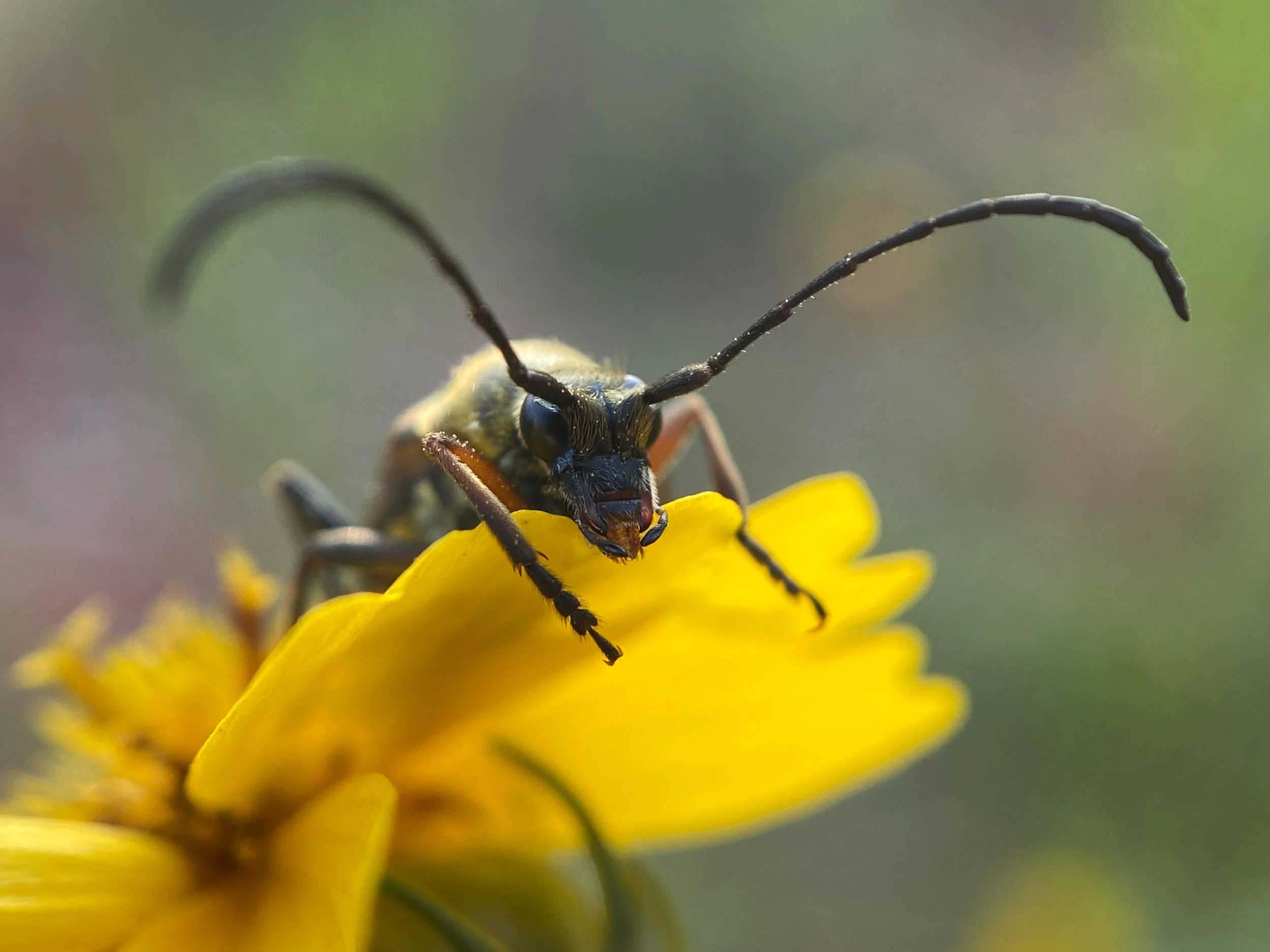
Large Mandibles for Chewing - Flower Longhorn Beetle on Coreopsis
Hidden beneath the bark of fallen trees and among the blooms of summer wildflowers lives one of Oklahoma’s most fascinating native insects. Flower longhorn beetles spend years quietly recycling dead wood before emerging as graceful flower visitors that help pollinate native plants.
What Are Flower Longhorn Beetles?
Flower longhorn beetles are a group of native beetles in the longhorn beetle family (Cerambycidae). Their name comes from their remarkably long antennae and their habit of visiting flowers as adults, where they feed on pollen and nectar.
Although many people notice them resting on Coreopsis, sunflowers, coneflowers, and other native blooms, much of their lives are spent completely hidden from view.
Their story begins beneath the bark of a fallen tree.
Nature’s Hidden Art Gallery
One afternoon, while exploring a fallen log, I peeled back a section of loose bark and discovered what looked like a tiny work of art.
Instead of smooth wood, the surface was covered with winding lines that twisted and curved beneath the bark like an intricate drawing.
These aren’t random patterns.
They’re called larval galleries. Each one was carved by a single beetle larva as it slowly tunneled through the wood while feeding.
Entomologists use the word gallery to describe these tunnels, and it’s a surprisingly fitting name. Each gallery is unique, recording the slow journey of an insect that spent months, and sometimes years, hidden inside a fallen tree.
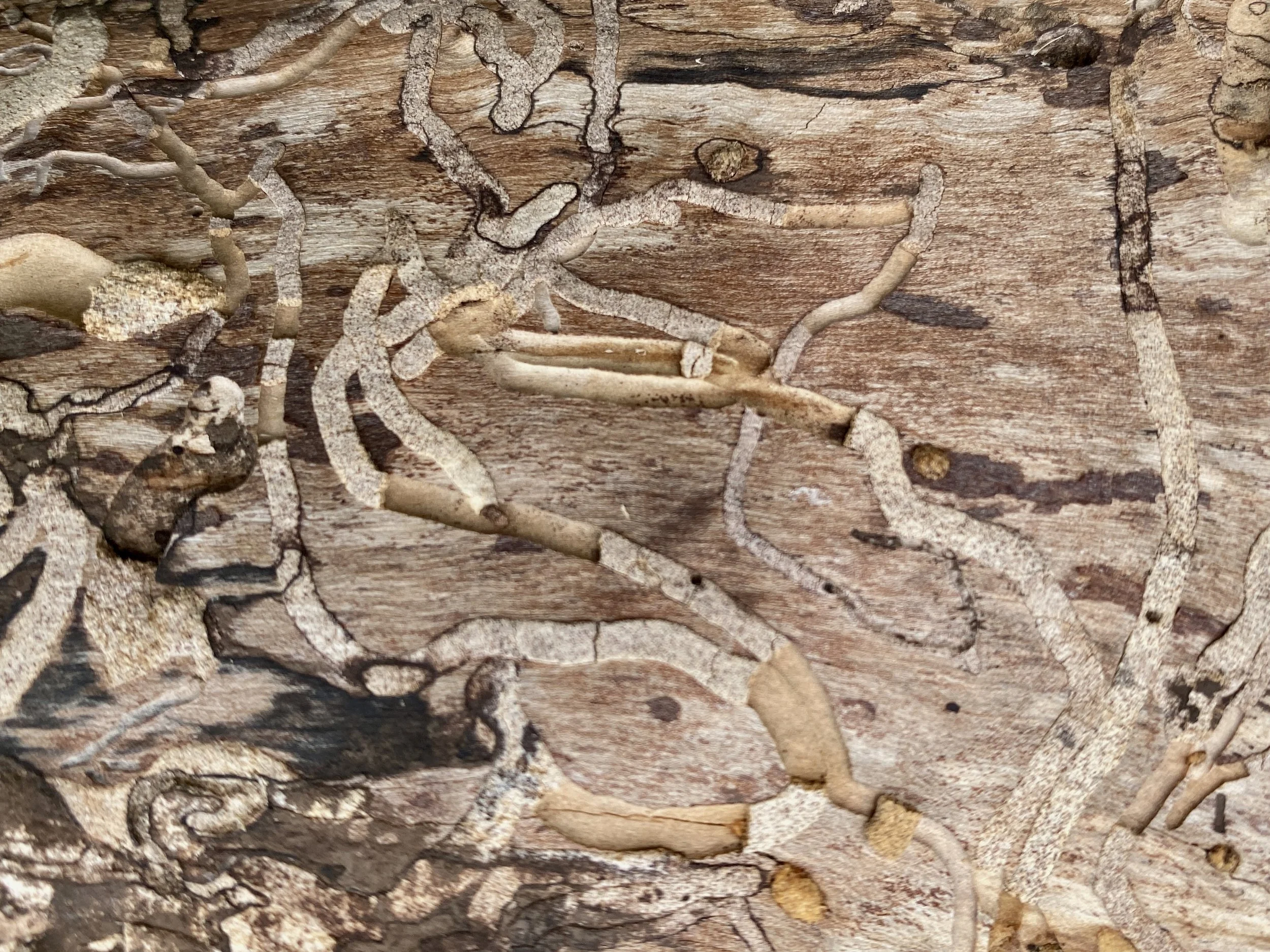
Tunnels bored by Longhorn Beetles
Why Do Longhorn Beetles Tunnel Through Wood?
Despite their reputation as “wood-boring beetles,” most flower longhorn beetles are not pests.
Their larvae typically develop inside trees that are already dead, dying, or badly weakened. Rather than harming healthy forests, they help recycle them.
As the larvae feed, they gradually break down wood that would otherwise take much longer to decompose. Their tunnels also create pathways that allow fungi, moisture, and other small organisms to move deeper into the log, speeding decomposition even further.
A fallen tree isn’t the end of a forest’s story.
It’s the beginning of another.
From Hidden Woodcarver to Wildflower Visitor
After spending years beneath the bark, the mature beetle chews a neat, round exit hole and emerges into the sunlight.
Its life changes completely.
Instead of carving galleries through wood, the adult spends its days visiting flowers
Flower longhorn beetles are especially fond of native composite flowers like Coreopsis, where they feed on pollen and nectar.
As they move from bloom to bloom, they also carry pollen, making them one of the many native insects quietly contributing to pollination across Oklahoma’s prairies and gardens.
The same insect that helped transform yesterday’s fallen tree into tomorrow’s soil now helps produce tomorrow’s seeds.
Why Fallen Logs Matter
It’s easy to see a fallen log as something lifeless.
In reality, it’s one of the busiest places in the forest.
Beneath the bark, beetle larvae tunnel through wood while fungi soften it. Tiny mites, springtails, spiders, centipedes, and countless other creatures make their homes among the galleries. Woodpeckers search the bark for hidden meals, while salamanders and reptiles find shelter beneath the decaying wood.
Every fallen tree becomes a small ecosystem.
When we leave dead wood where it’s safe to do so, we’re preserving habitat for hundreds of species that help keep our ecosystems healthy.
Looking for Flower Longhorn Beetles in Oklahoma
Your best chance of spotting flower longhorn beetles is from late spring through summer.
Look for them visiting native wildflowers such as:
Coreopsis (tickseed)
Purple coneflower
Black-eyed Susan
Native sunflowers
Queen Anne’s lace
Mountain mint
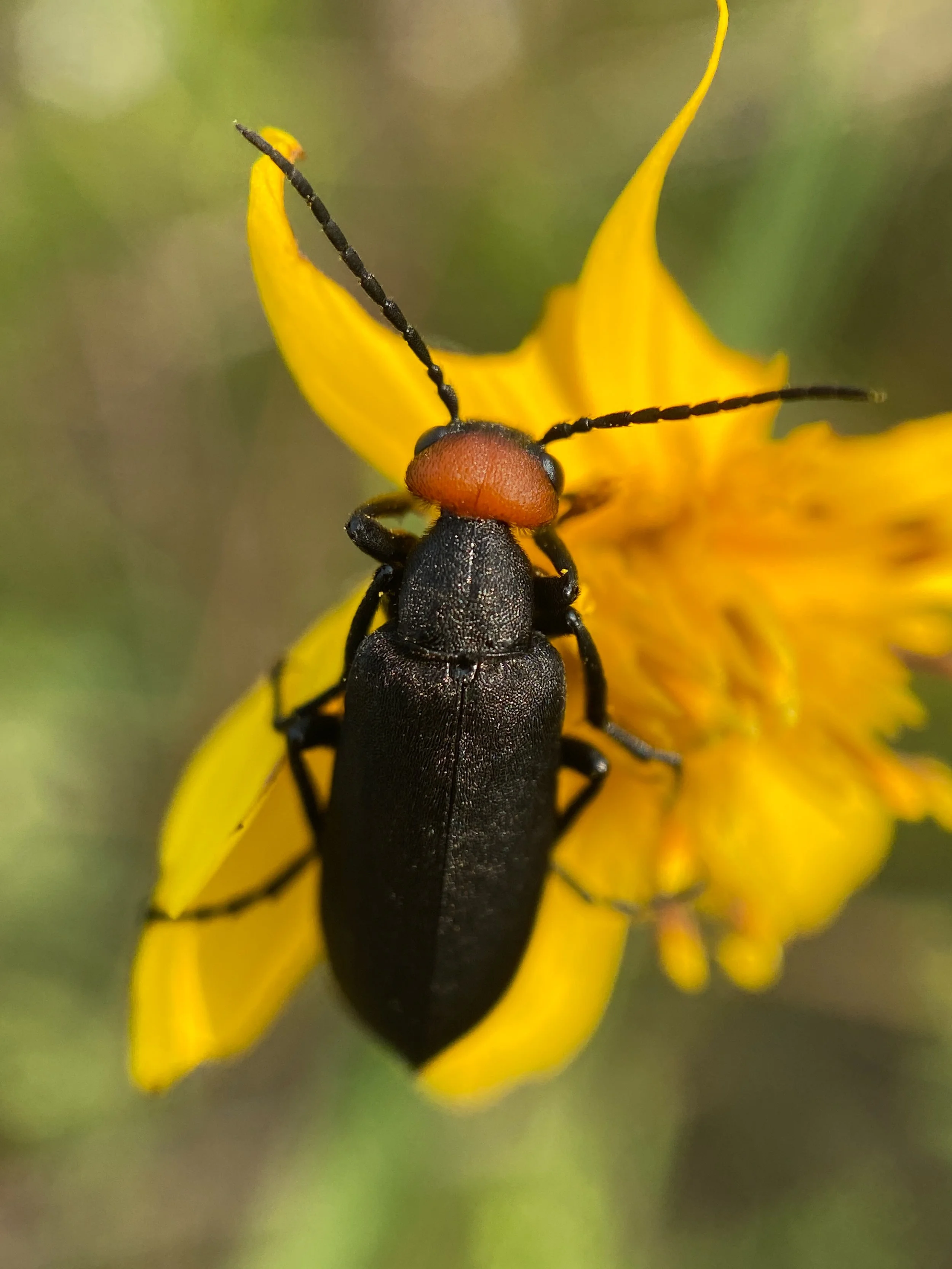
Flower Longhorn Beetle on Coreopsis
If you discover a naturally fallen log with loose bark, gently lifting a small section may reveal beautiful larval galleries beneath. Be sure to replace the bark afterward so the tiny community living underneath can continue undisturbed.
A Different Way to See Beetles
The next time you notice a longhorn beetle on a flower, remember that you’re looking at only the final chapter of its story.
Long before it visited that bloom, it spent years hidden beneath the bark, quietly carving galleries, recycling wood, and helping return nutrients to the forest.
Perhaps that’s why I think of them as artists.
Not because they intended to create something beautiful, but because their lives leave behind unexpected beauty wherever they go.
The next time you peel back a piece of loose bark from a naturally fallen log, you may just discover one of Oklahoma’s oldest art galleries.
