Ehlers-Danlos Month, Invisible Disability, & The Ecology of Belonging
There are days my body feels less like a machine and more like weather.
Pressure systems move through my joints before storms arrive. Heat gathers in the walls of summer and settles heavily into muscle and mind. Some mornings, even gravity feels louder than usual. The body speaks constantly, though modern culture teaches us to ignore it until something breaks.
Living with disability and chronic illness has changed the way I experience the natural world. Not in the romanticized way wellness culture often portrays nature, but in quieter and more complicated ways. The relationship feels less like escape and more like recognition.
After enough time being unwell, you begin noticing things differently.
You notice how many public spaces are designed around speed and endurance. How many gatherings quietly assume a certain level of energy, mobility, sensory tolerance, or social ease. How often human value is measured through output, productivity, appearance, and stamina.
You also begin noticing how differently the living world operates.
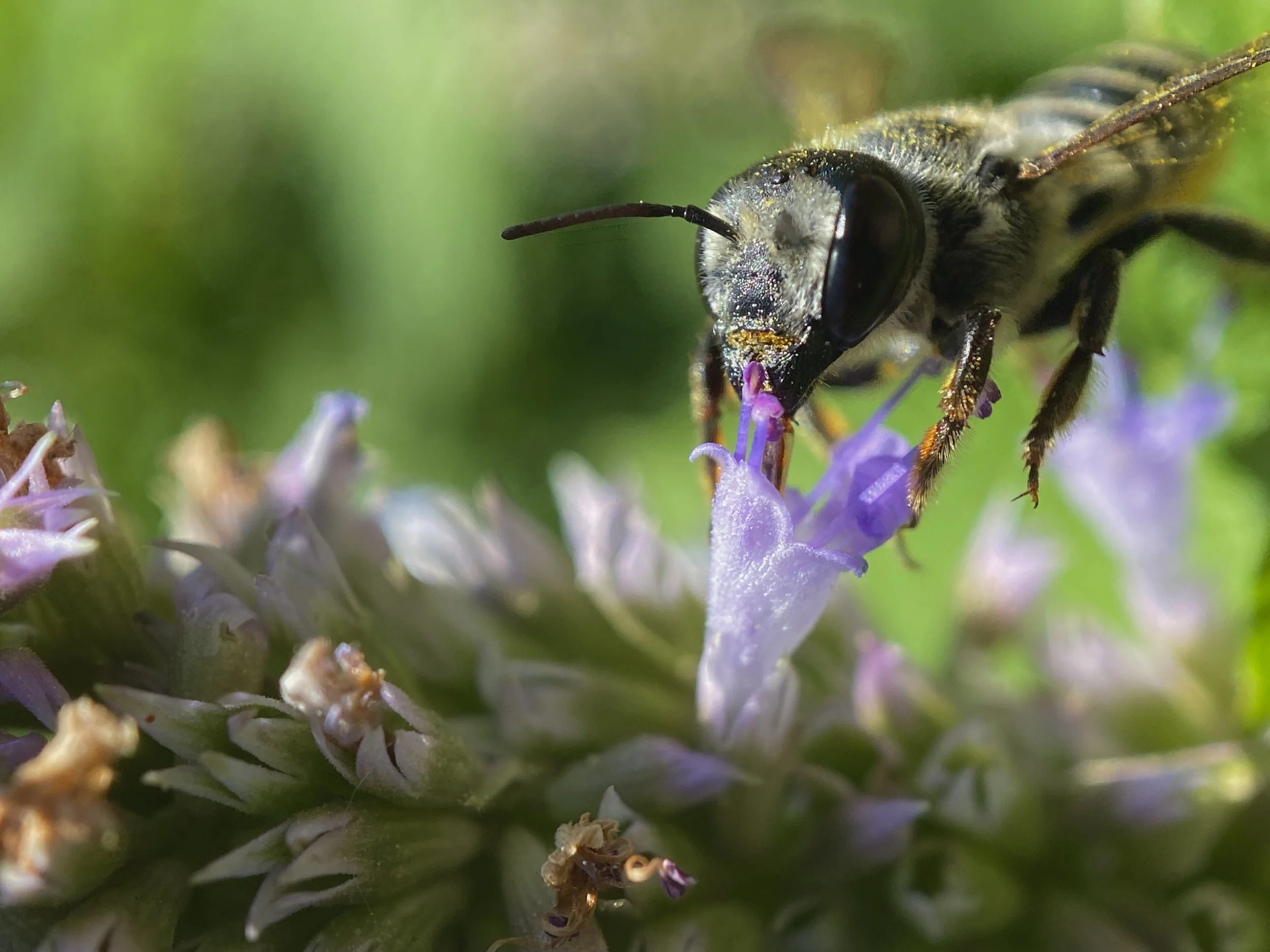
Prairies are built through interdependence. Forests share nutrients through fungal networks beneath the soil. Pollinators depend on flowers. Flowers depend on pollinators. Fallen trees become habitat. Dormancy is not treated as failure. Diversity strengthens resilience.
The natural world does not separate worth from participation in the same way industrial culture often does.
I think many disabled people understand interdependence intimately because we are forced into relationship with it. We learn how vulnerable human life actually is. We learn what it means to need help in a culture obsessed with independence. We learn how quickly bodies can change. How fragile energy can become. How humiliating it can feel to need rest in a society that worships exhaustion as virtue.
And yet, outside, life continues through cycles rather than constant production.
The garden does not bloom year round. Fields rest. Trees shed. Entire ecosystems slow down and gather energy invisibly beneath the surface long before anything green returns.
“Even a wounded world is feeding us,” wrote Joanna Macy. “Even a wounded world holds us.”
I have thought about that often while sitting outside exhausted after medical appointments. Sometimes all I can manage is a rocking chair in the shade and the sound of birdsong moving through the air. Sometimes I watch native bees move through asters while my nervous system slowly settles after fluorescent waiting rooms, traffic, paperwork, phone calls, and the exhausting performance of trying to explain invisible illness to people who cannot see it.
May is Ehlers-Danlos Awareness Month, a condition group symbolized by the zebra. The zebra became a mascot because of an old medical saying taught to students: “When you hear hoofbeats, think horses, not zebras.” The phrase encourages doctors to first look for common explanations before rare ones.
But many of us living with complex chronic illnesses know what it feels like to spend years being the zebra no one was looking for.
Years of symptoms folded into anxiety, stress, sensitivity, aging, overreaction, depression, or imagination. Years of learning how difficult it can be for people to believe suffering they cannot immediately measure or visibly see. Years of moving through systems that often prefer simplicity over complexity, certainty over curiosity.
And yet, ecology itself teaches us that living systems are rarely simple.
A prairie is not made of one species. A forest is not sustained by one visible process. The body is not separate systems stacked neatly beside one another, but an unfolding conversation between structure, environment, nervous system, microbes, memory, stress, nourishment, relationship, rest, and time.
Sometimes I think the zebra belongs ecologically too.
Not as something exotic or broken, but as a reminder that biodiversity exists everywhere, including within human bodies. Variation is part of life. Complexity is part of life. Interdependence is part of life.
The natural world has never demanded uniformity in the way human systems often do.
Nature has become less of a destination for me and more of a relationship.
Not the performative version sold to us online. Not the expensive adventure lifestyle version. Not productivity disguised as wellness. Just relationship.
Wind through the trees.
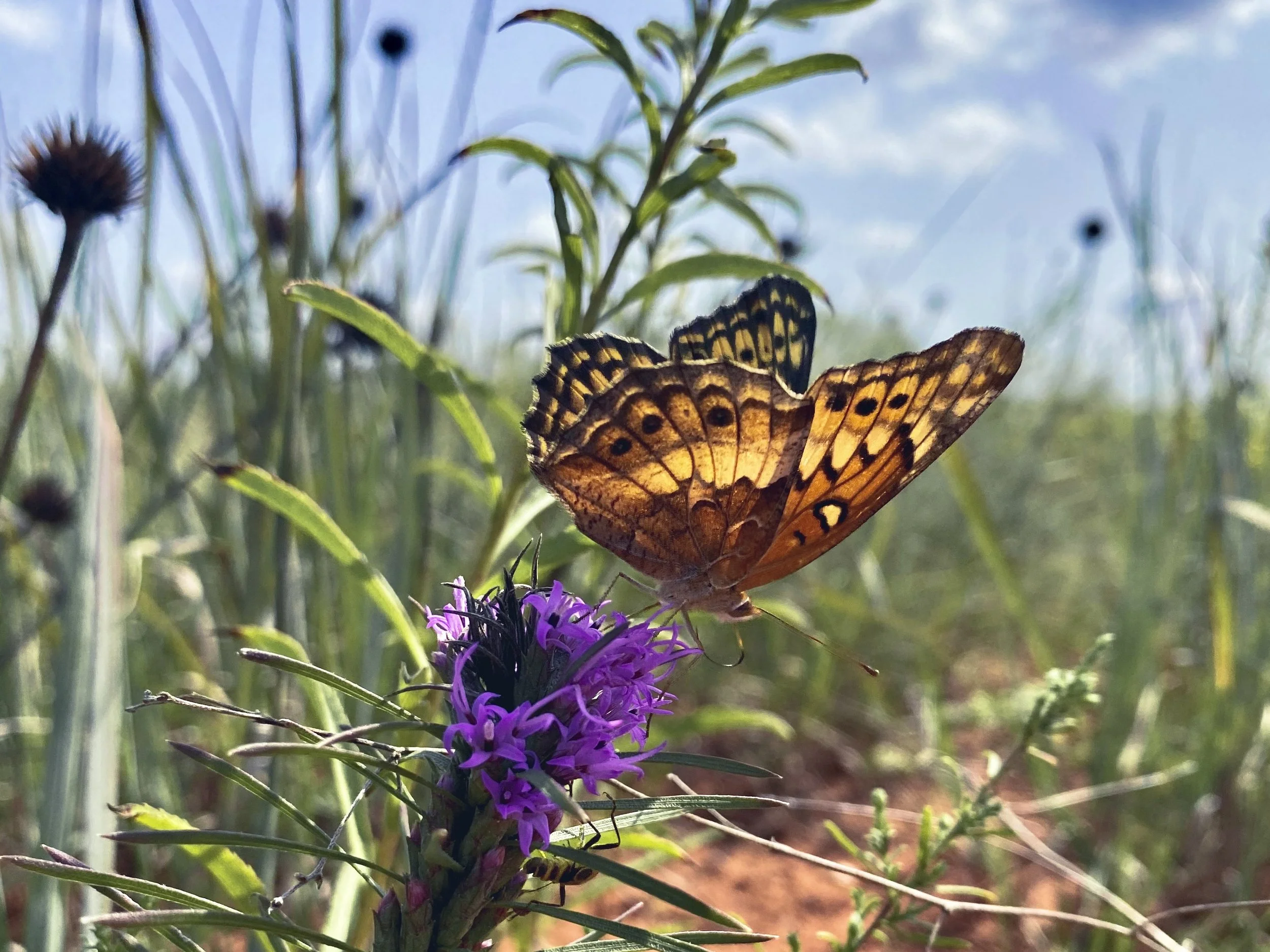
A swallowtail moving across a stand of milkweed.
The smell of rain rising from dry soil.
The strange comfort of realizing the more-than-human world does not care whether I am successful, efficient, attractive, impressive, or useful under capitalism.
It asks very little of me besides attention.
I think this is part of why so many disabled, neurodivergent, chronically ill, and emotionally exhausted people find solace outdoors. The natural world often allows forms of belonging human systems do not.
Not because nature is always gentle. It isn’t.
Nature can be inaccessible, harsh, muddy, hot, allergenic, physically demanding, and indifferent to human comfort. But even in its indifference, there is honesty. A kind of unspoken permission to exist without performance.
The philosopher and cultural ecologist David Abram writes that we are human only in contact with what is not human. I think modern industrial life has severed many of those relationships. We spend enormous portions of our lives indoors beneath artificial light, separated from weather, seasons, birdsong, soil, and the slow sensory rhythms our bodies evolved alongside for millennia.
And perhaps this separation harms us more deeply than we realize.
Not only ecologically, but emotionally, spiritually, physiologically.
Many disabled people already live at the edges of dominant systems. We often see the fractures more clearly because we fall through them. We know what it feels like to become inconvenient inside systems built for extraction and efficiency. We know the loneliness of invisibility. The exhaustion of proving suffering over and over again in order to receive care, support, accommodation, or belief.
Yet outside, ecological communities function through relationship rather than perfection.
A damaged tree still shelters birds.
Decay feeds mycelium.
A prairie survives fire through adaptation.
Nothing exists alone for long.
Thomas Berry once wrote, “The universe is a communion of subjects, not a collection of objects.”
I return to that idea often.
Especially during periods where my own body feels reduced to diagnoses, paperwork, symptoms, numbers, scans, prescriptions, and limitations. Ecology reminds me that life is relational, not mechanical. We are not separate from the living systems around us. Human bodies are ecosystems themselves. Breathing landscapes. Watersheds of bacteria, minerals, memory, electricity, emotion, grief, adaptation, and need.
And perhaps there is wisdom in remembering that dependency is not failure. It is ecology.
The truth is, many people living with disability and chronic illness spend enormous amounts of time indoors and isolated. Not because we want to be disconnected from life, but because modern society often makes participation exhausting, inaccessible, expensive, overstimulating, or physically difficult.
I think accessible ecological spaces matter deeply because of this.
Not every relationship with nature needs to look like hiking mountains or traveling to remote wilderness. Sometimes connection is simply sitting barefoot in a patch of grass. Watching goldfinches gather at sunflowers outside a window. Growing herbs in pots on an apartment balcony. Listening to rain. Learning the names of neighborhood birds. Feeling winter arrive through the body before the calendar announces it.
Small relationships still count.
Maybe they always counted more than we realized.
The older I get, the less interested I am in conquering nature, transcending the body, or optimizing myself into worthiness. I am more interested in participation. In reciprocity. In remembering that humans are not separate from the biosphere but expressions of it.
Bodies change.
Ecosystems change.
Lives change.
And still, beneath it all, the red earth continues breathing.