Native Plants that Feed Life Through the Hardest Heat In Oklahoma
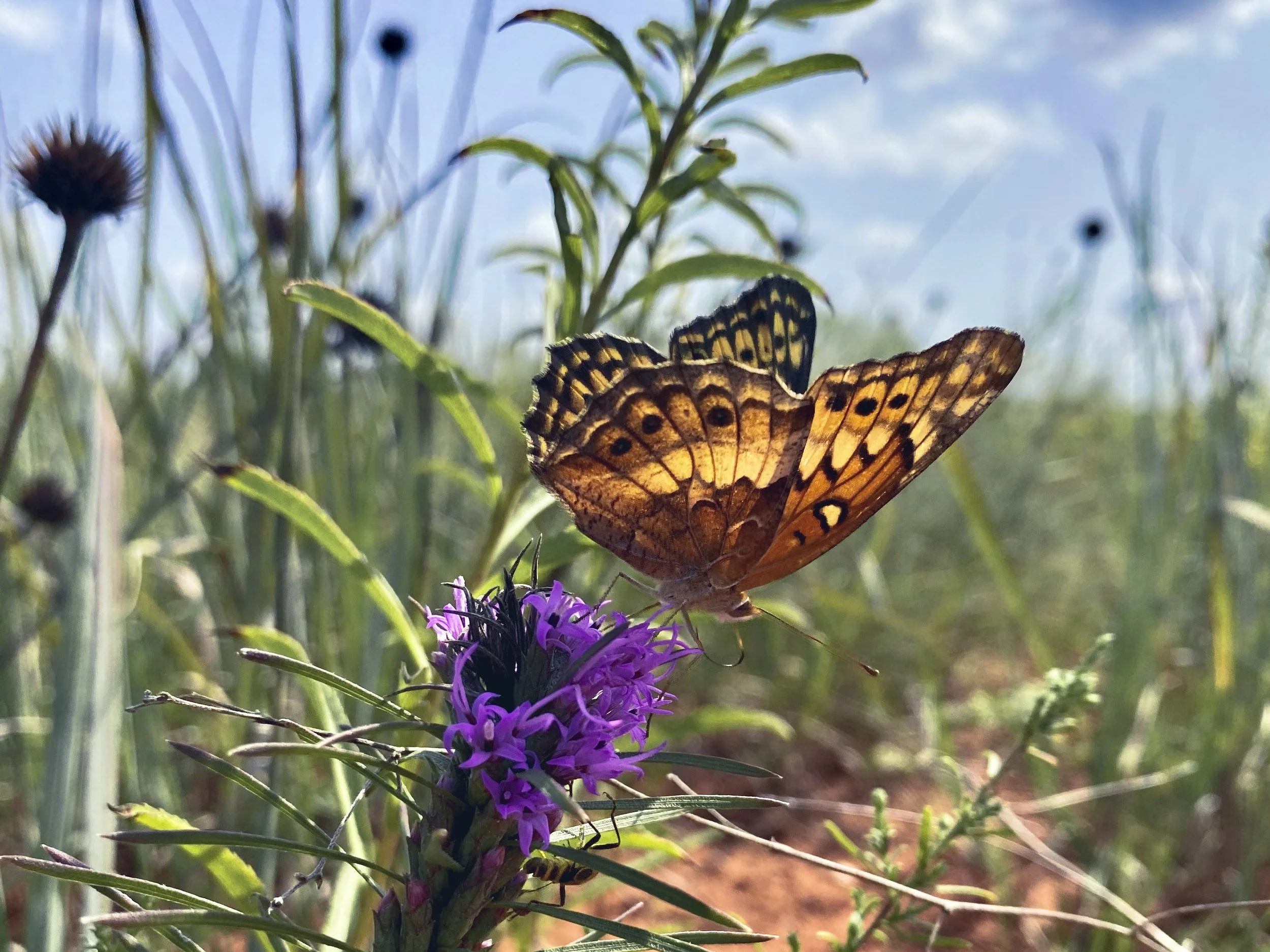
By July in Oklahoma, the landscape begins to speak a different language.
The exuberance of spring has quieted. Wildflowers that once painted roadsides in brilliant color have gone to seed. Lawns fade to straw. Creeks shrink. The afternoon air shimmers above the prairie, and even the birds seem to retreat into the shade during the hottest hours of the day.
To us, it can feel as though nature is taking a pause.
But life has not stopped.
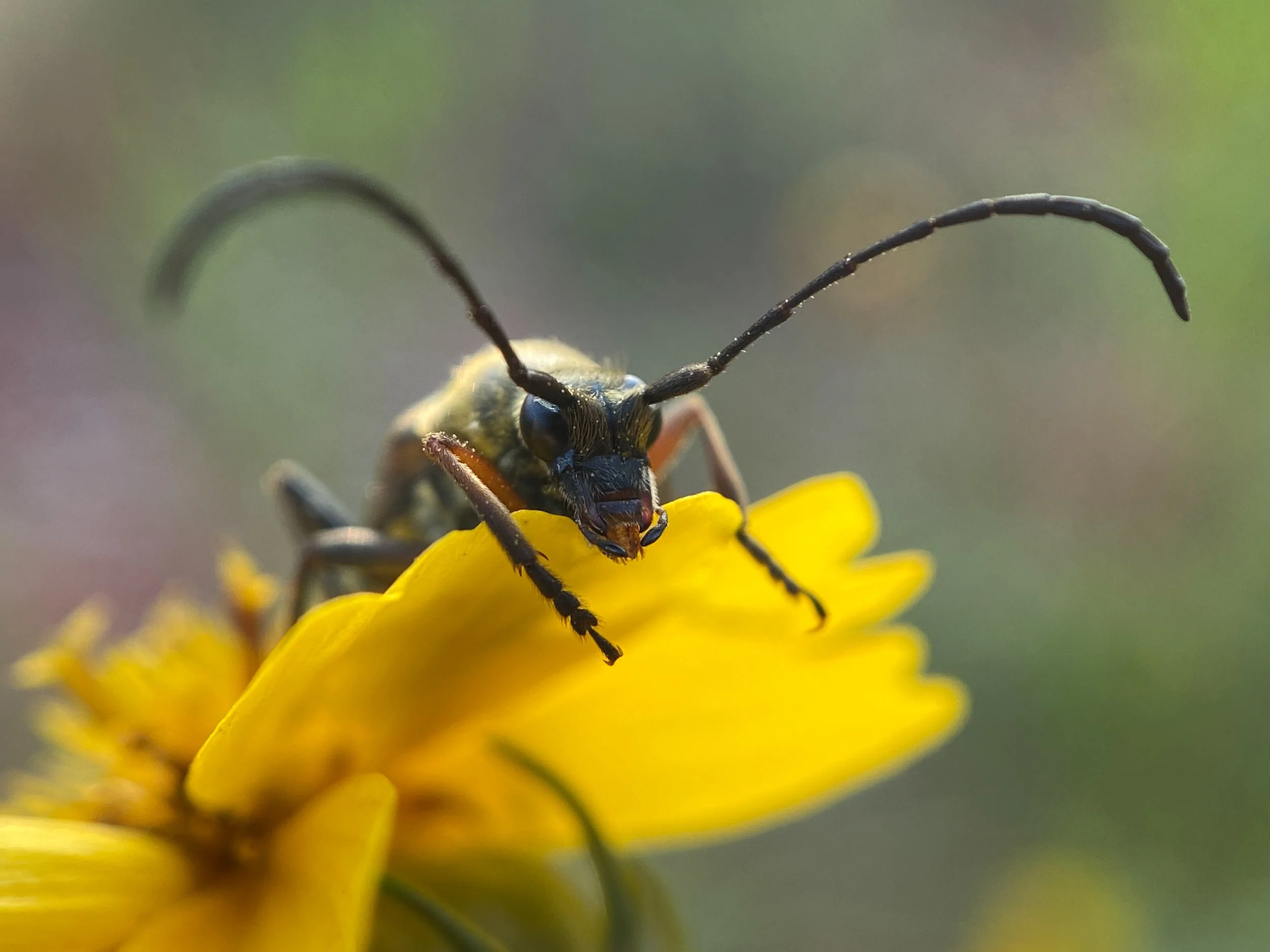
Hidden beneath leaves, native bees continue gathering pollen to provision underground nests. Monarch butterflies search for milkweeds on which to lay their eggs. Tiny sweat bees, hoverflies, wasps, beetles, moths, and countless other insects continue the quiet work that keeps ecosystems functioning. Songbirds race back and forth carrying insects to hungry fledglings. Dragonflies patrol ponds and fields, while hummingbirds visit every nectar source they can find.
Summer is not an ending. It is one of the year’s greatest tests.
And during those long weeks of relentless heat, the plants that continue flowering become far more than beautiful. They become lifelines.
The Forgotten Season
Spring gardening receives most of our attention, and for good reason. It is a season of abundance, when blossoms seem to appear effortlessly and pollinators are everywhere.
But ecologically speaking, midsummer may be even more important.
Many ornamental flowers slow or stop blooming as temperatures climb into the upper nineties and beyond. Others require constant irrigation simply to survive. As floral resources disappear, nectar and pollen become increasingly scarce just as many insects are still actively reproducing and birds are still raising young.
This period creates what ecologists sometimes call a seasonal resource gap. When fewer plants are blooming, every remaining flower becomes more valuable.
Native plants evolved alongside these challenging summers. Rather than avoiding the heat, many embrace it. Some bloom precisely when other flowers have faded, offering food when it is needed most.
More Than Nectar
When we think about feeding wildlife, we often imagine flowers full of bees and butterflies.
Nectar is certainly important, but native plants nourish life in many different ways.
Their pollen feeds hundreds of species of native bees.
Their leaves become food for caterpillars, beetles, and other herbivorous insects. Those insects, in turn, become food for birds, reptiles, amphibians, and mammals.
Their stems provide shelter for spiders and nesting sites for solitary bees.
Their seeds sustain goldfinches, sparrows, quail, and other wildlife long after the blooms have faded.
Even the plants that appear tired or weathered by August may still be supporting dozens of species. A leaf with chew marks is often evidence that the garden is functioning exactly as it should.
In nature, perfection is rarely the goal. Relationship is.
Native Plants That Keep the Table Set
Some native plants seem to thrive precisely when summer feels almost unbearable. These species continue offering nectar, pollen, seeds, or habitat during one of the most challenging seasons of the year.
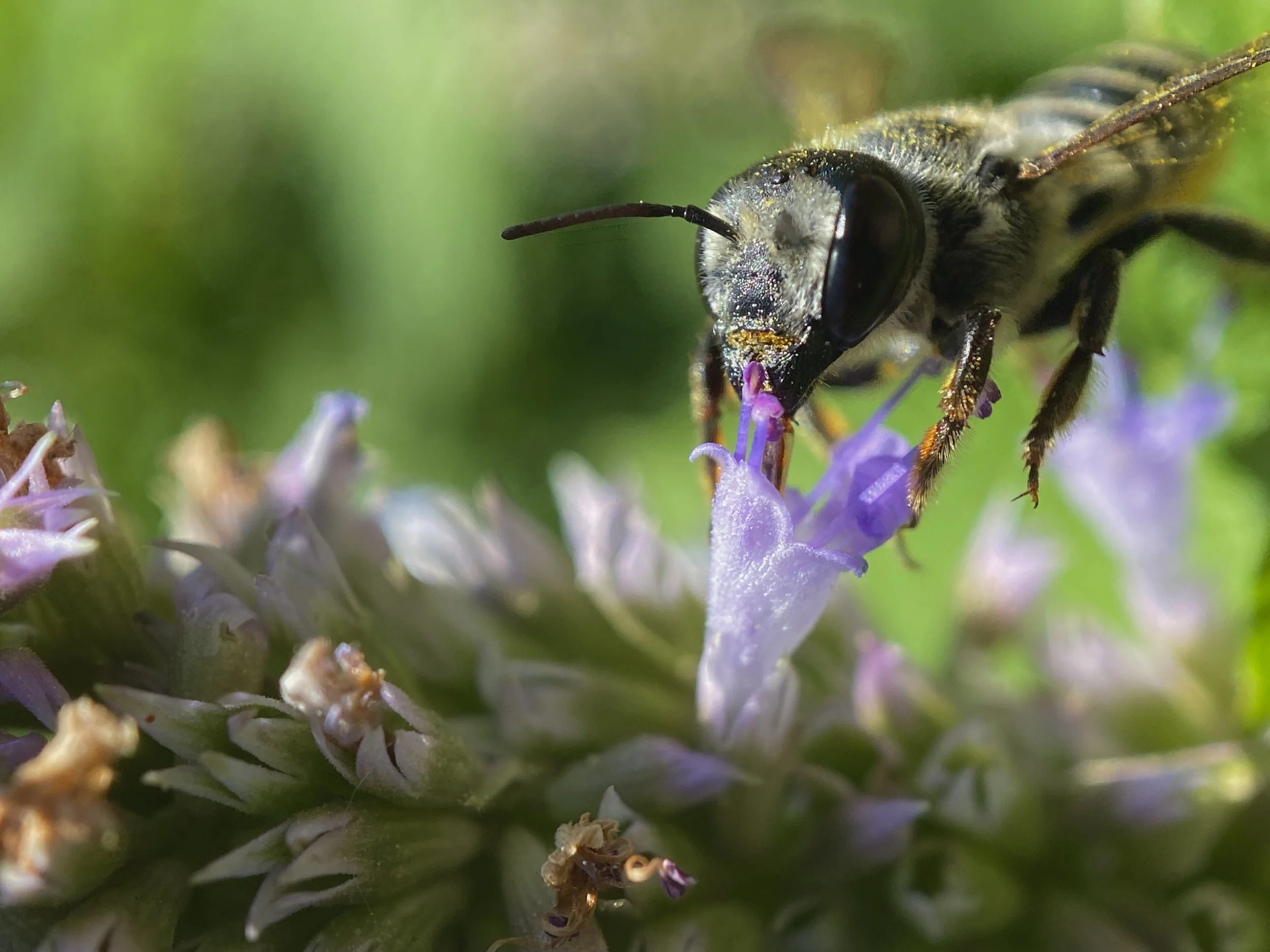
Mountain mint (Pycnanthemum spp.) is often called a pollinator magnet, and for good reason. On a warm afternoon, its blossoms may host dozens of different visitors at once, from native bees and honey bees to tiny beneficial wasps, hoverflies, butterflies, and beetles. Few plants rival its ecological productivity.
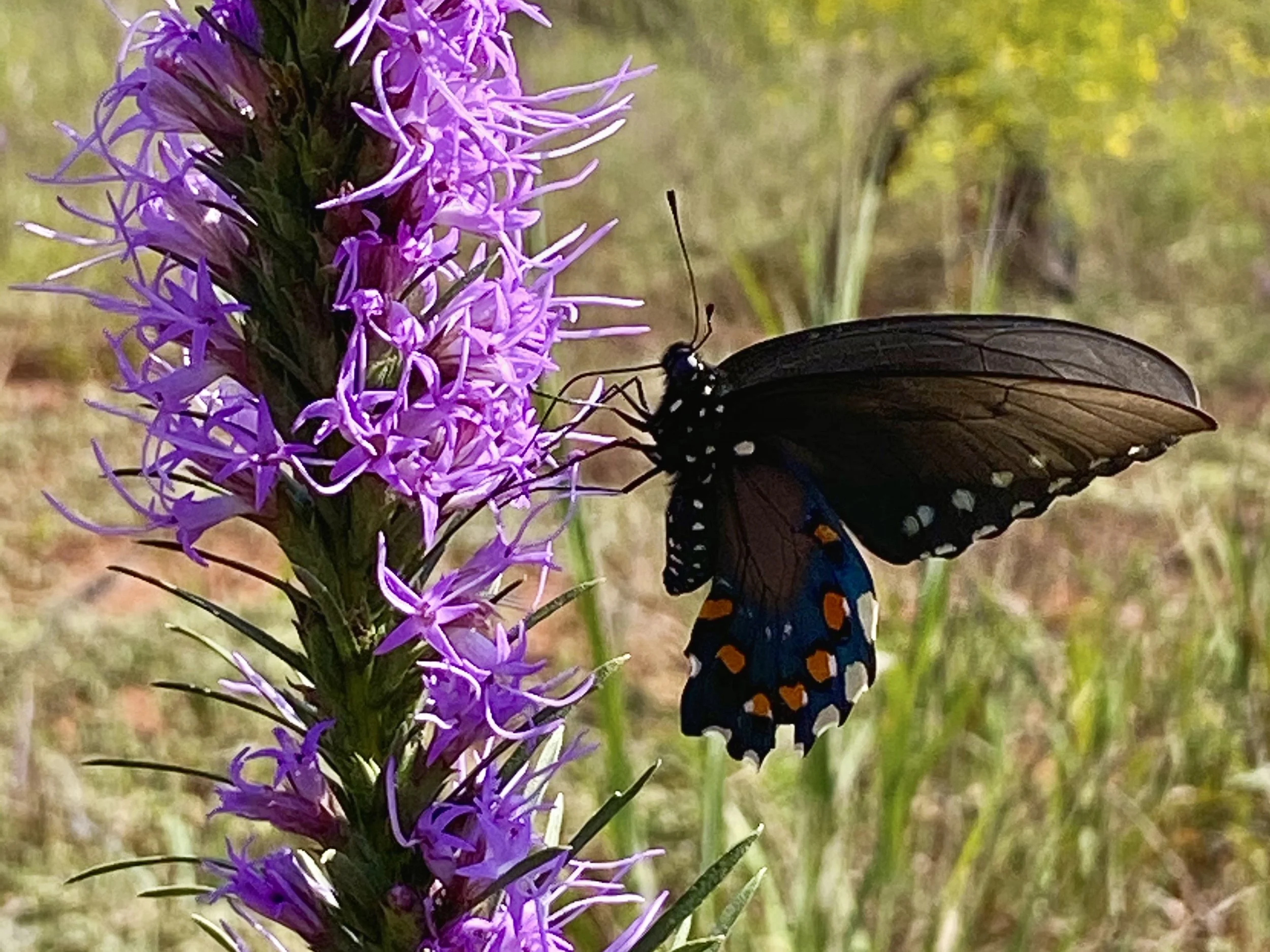
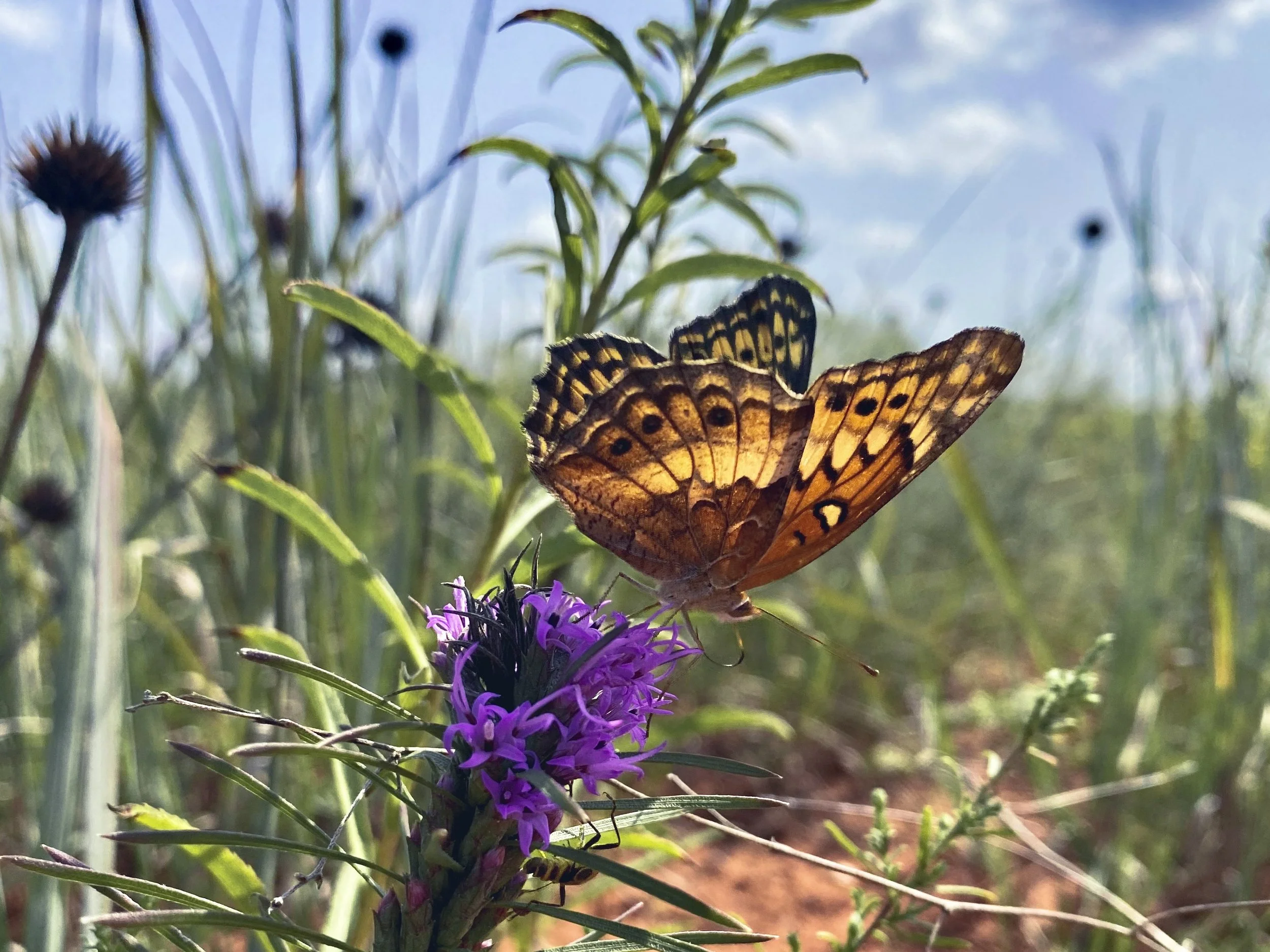
Blazing stars (Liatris spp.) send brilliant purple flower spikes above the prairie just as summer reaches its peak. Butterflies, long-tongued bees, and hummingbirds all make regular visits, while the flowers add striking vertical texture to the landscape.
Native sunflowers (Helianthus spp.) are among the most generous plants in an Oklahoma garden. Their flowers support a wide variety of pollinators, their foliage feeds numerous caterpillars, and their seeds later nourish birds well into autumn.
Rattlesnake master (Eryngium yuccifolium) may not resemble the showy flowers gardeners often expect, yet its unusual globe-shaped blooms attract an astonishing diversity of insects. Spend just a few minutes watching one in bloom, and you’ll likely discover species you’ve never noticed before.
Purple prairie clover (Dalea purpurea), blue sage (Salvia azurea), button blazing star (Liatris aspera), Illinois bundleflower (Desmanthus illinoensis), goldenrods (Solidago spp.), and native grasses each contribute their own vital piece to the late-summer food web.
Together, they ensure that the garden continues feeding life long after many cultivated flowers have finished their display.
Beauty That Gives Back
Modern gardening often encourages us to judge plants by appearance alone.
Are the leaves spotless?
Is every bloom perfect?
Does the garden still look polished in August?
Nature asks different questions.
Did this plant feed caterpillars?
Did it offer nectar during a drought?
Did birds find seeds here in autumn?
Did native bees raise another generation because these flowers were blooming?
A sunflower missing half its leaves may have nourished dozens of caterpillars.
A faded coneflower may become a banquet for goldfinches.
A hollow stem left standing through winter may shelter the next generation of native bees.
When we begin looking through the eyes of the ecosystem, signs of wear become signs of generosity.
Planting for Resilience
As our summers become hotter and longer, choosing native plants is about more than creating beautiful gardens.
It is about building resilient landscapes that continue supporting life through increasingly difficult conditions.
Every blazing star blooming in August, every stand of little bluestem swaying in the heat, every mountain mint alive with bees becomes a small refuge in a season when resources are scarce.
These plants remind us that resilience is not merely surviving hardship.
It is continuing to nourish others through it.
Perhaps that is one of nature’s greatest lessons.
The most important flowers are not always those that bloom when conditions are easy.
Sometimes they are the ones still standing when the sun is fiercest, quietly feeding the countless lives that depend upon them.