A Season of Extremes
This season hasn’t unfolded gently…
The land has been speaking in sharp contrasts of fire and wind, dust and thunder, stillness and violence.
Across Oklahoma, hundreds of thousands of acres have burned in recent months. What once held together complex systems of native grasses, root networks, and microbial life has been reduced to ash and exposed soil in some places.
Prairie ecosystems are not strangers to fire. In fact, fire has long been one of their architects.
Many native grasses evolved with periodic burns. Their roots sometimes grow several feet into the ground storing precious energy below the surface. Fire clears away accumulated plant material, returns nutrients to the soil in the form of ash, and opens space for new growth. Certain seeds even require heat or smoke exposure to germinate.
In balance, fire is renewal, but this season hasn’t been balanced.
Drought has tightened its grip across the region. When soil moisture drops, plants produce less biomass and become more brittle. At the same time, years of fire suppression and woody encroachment from species like eastern red cedar have increased fuel loads. These trees hold volatile oils and burn hotter than native grasses, changing the intensity and behavior of fire.
Under these conditions, fire moves hotter and faster and deeper.
Instead of lightly passing over the land, it can penetrate into the soil surface, damaging root systems, disrupting fungal networks, and reducing the biological activity that healthy soil depends on. What remains is a system temporarily stripped of its structure.
In some places, the grass is gone. The roots that once held the soil in place are weakened or destroyed. Without that living web, wind and rain begin to carry the soil away.
In addition to wildfires, Oklahoma’s early spring has already brought severe weather across Oklahoma, including tornadoes and high-wind events. These disturbances reshape landscapes in their own way by splintering trees, fragmenting habitats, and disturbing soil that’s already vulnerable.
This is the nature of extremes. Disturbances don’t arrive in isolation. They compound.
A burned landscape is more susceptible to erosion.
A drought-stressed system recovers more slowly.
A disrupted habitat becomes an opening for both regeneration and invasion.
Because not everything that returns is native.
When soil is exposed and ecosystems are weakened, opportunistic species often move in first. Some are helpful early colonizers. Others are invasive, outcompeting native plants and altering the long-term trajectory of the land, a little bit at a time, through a series of events.
And yet, even here, life does not fully retreat.
Beneath the surface, much remains intact such as the deep roots of native prairie plants. Big bluestem, switchgrass, and Indian grass often survive even intense fire. Underground buds and seed banks persist, waiting for the right conditions. When rains return, these systems can begin to rebuild from below, stabilizing soil and restoring habitat over time.
Recovery, however, is not guaranteed. It depends on timing, moisture, and what fills the space in the interim.
Warmer winters, shifting precipitation patterns, prolonged drought, and increased fuel loads are not separate phenomena. They are interconnected signals of a changing climate system that’s amplifying both fire and storm intensity across the Southern Plains.
For those of us who live close to the land, who plant into it, who pay attention, this is not abstract. It’s visible in the timing of blooms, in the absence of insects where they once gathered, and in the way the soil looks and feels underfoot.
There’s much grief in witnessing this unfold in real time… But there is also responsibility.
Because resilience is not only something ecosystems possess. It is something WE participate in.
To plant native species that belong to this place.
To restore root systems that hold the soil.
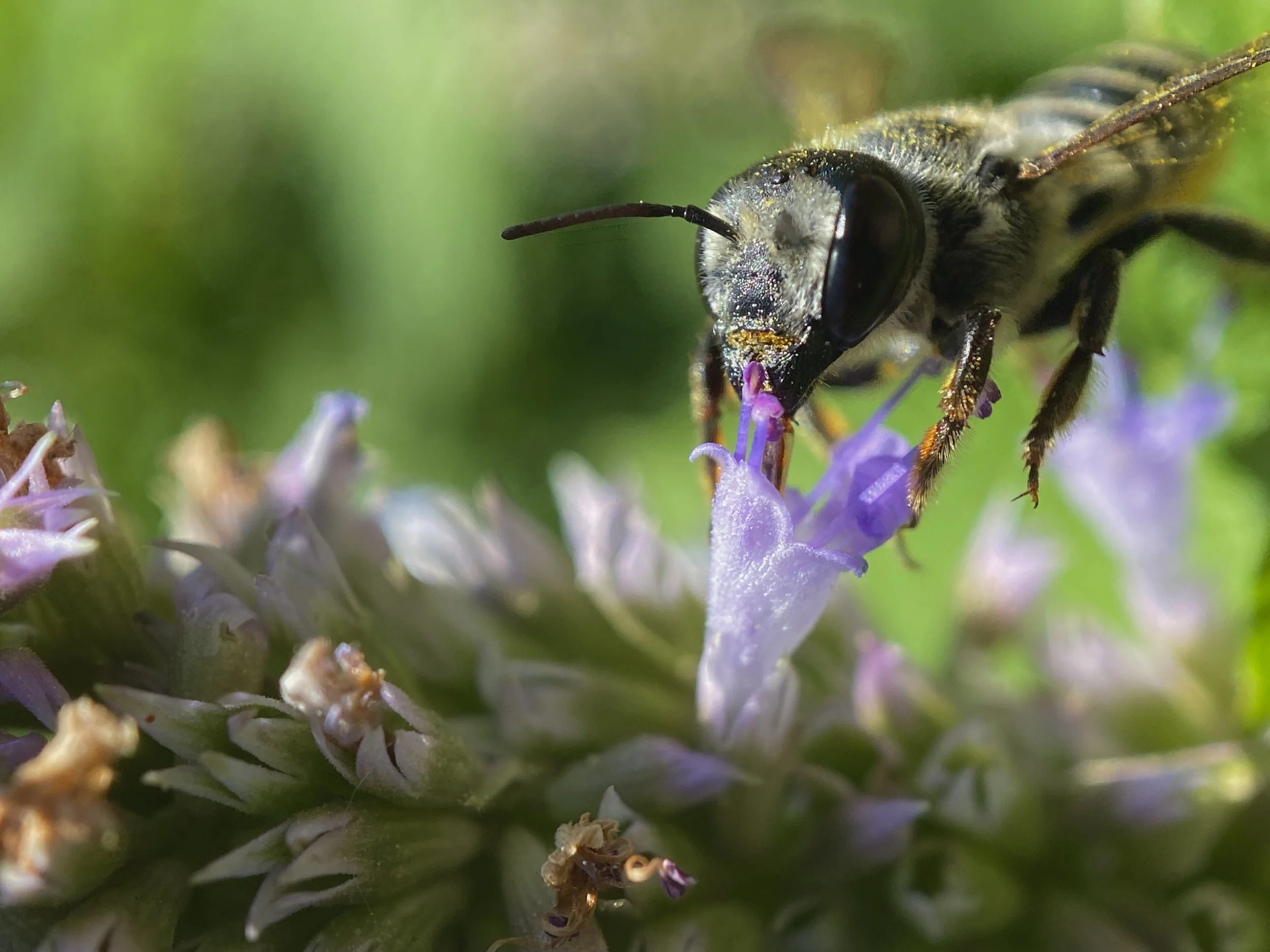
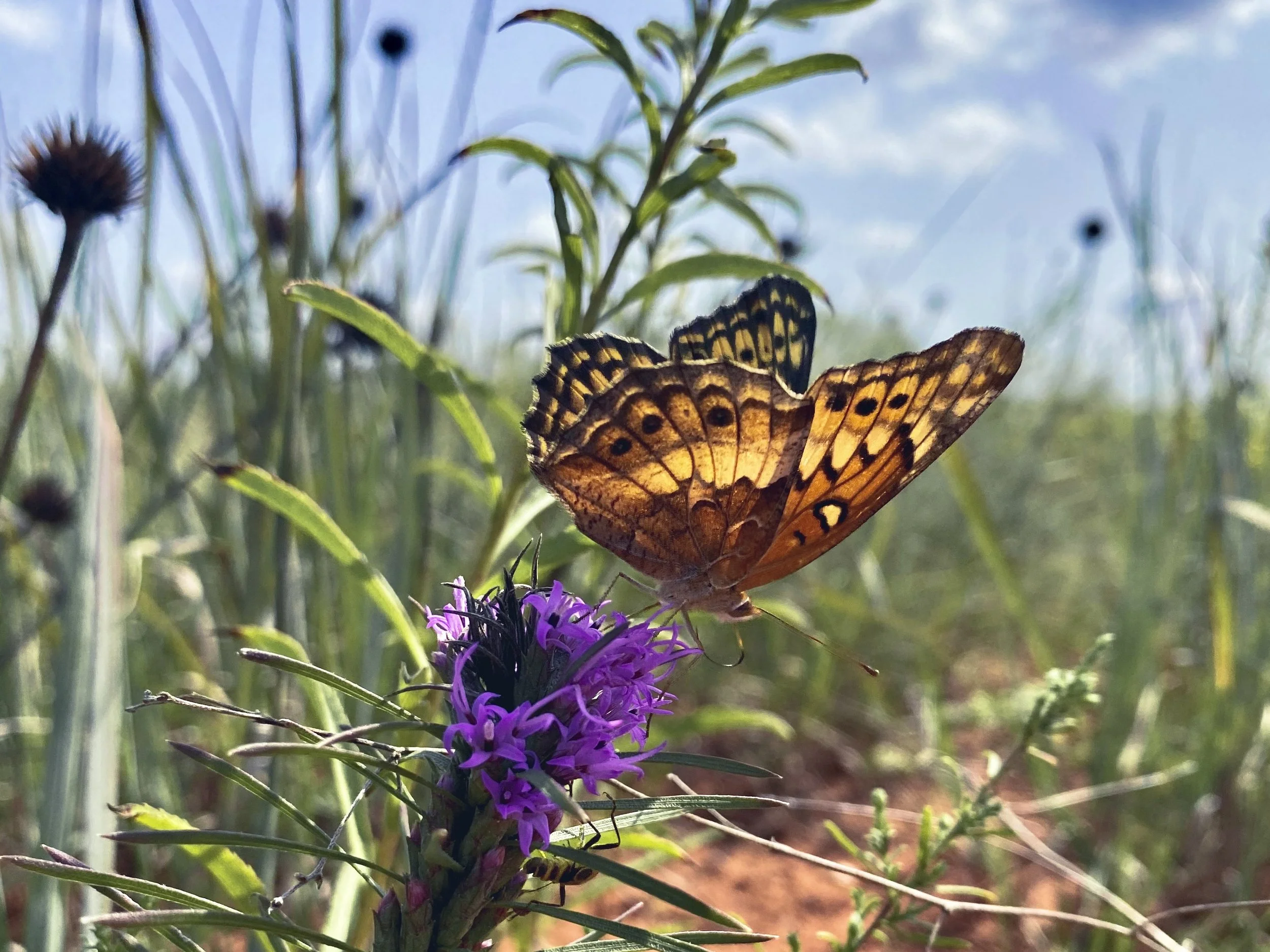
To support pollinators that rebuild ecological relationships.
To learn the rhythms of fire, rather than fear or suppress it entirely.
These actions may seem small against the scale of change, but prairie ecosystems themselves are built on small things such as roots, seeds, relationships repeated over time.
In a season of extremes, those small acts matter.
Because the story of this land is not only written in fire and storm.
It is written in what endures beneath, and in what is willing to return.
If these patterns continue… and all signs suggest they will… then the question becomes not only how the land will adapt, but how will we?
Resilience is not built in a single moment. It is shaped in small, consistent choices that strengthen the systems we depend on.
Here are a few ways to begin:
1. Rebuild the roots beneath your feet.
Plant native species that belong to Oklahoma’s prairie and cross-timbers landscapes.
These plants are more than ornamental, they’re structural.
Deep-rooted grasses like:
• big bluestem
• little bluestem
• Indiangrass
• switchgrass
can send roots several feet into the soil, helping anchor land during high winds and heavy rain while improving water absorption during drought.
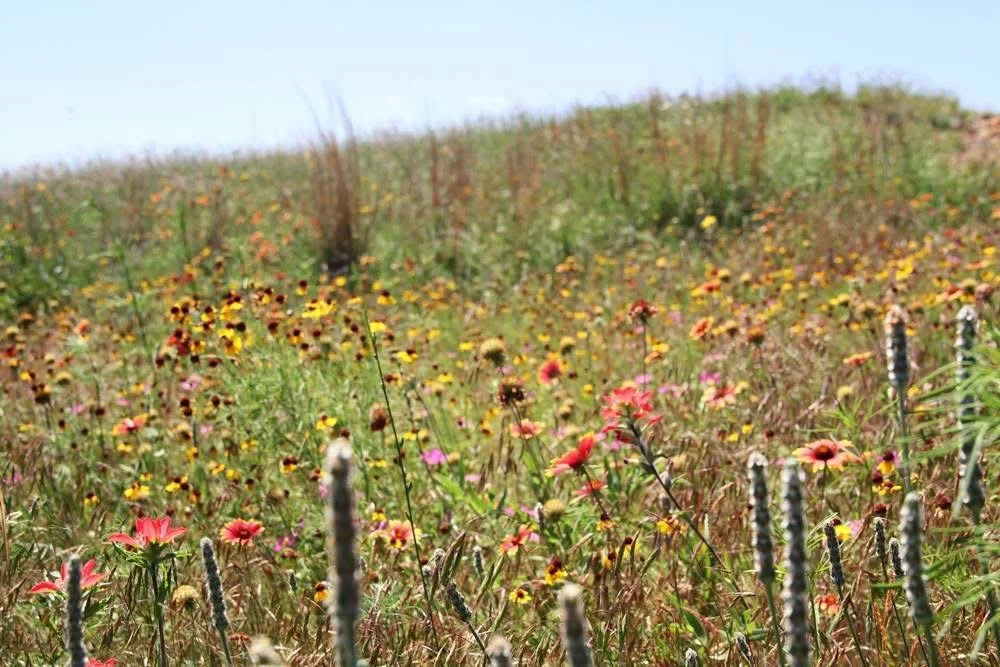
Pair them with resilient wildflowers such as:
• purple coneflower
• black-eyed Susan
• gaillardia (blanket flower)
• plains coreopsis
• milkweed (for monarchs)
Together, they rebuild the underground networks that hold ecosystems together.
Even a small planting becomes part of something larger.
2. Work with fire, not against it.
Understand how fire naturally belongs to Oklahoma landscapes and how imbalance has changed it.
Historically, periodic fires kept prairies open and healthy. Today, species like eastern red cedar have spread aggressively due to fire suppression. These trees:
• outcompete native grasses
• consume large amounts of water
• burn intensely, increasing wildfire severity
Supporting restoration efforts like cedar removal and prescribed burns led by trained professionals helps return fire to its natural role:
• clearing excess fuel
• recycling nutrients
• encouraging native plant regeneration
When fire is balanced, it isn’t destruction. It’s part of renewal.
3. Prepare your land for drought and sudden rain.
Design your space to hold water when it comes and endure when it doesn’t.
Oklahoma’s climate is shifting toward longer dry periods punctuated by intense storms. You can work with this by building soil and slowing water.
Consider:
• Adding mulch and leaf litter to protect soil and retain moisture
• Planting drought-adapted natives like prairie dropseed, rattlesnake master, and maximilian sunflower
• Creating shallow swales or rain gardens with species like blue flag iris, sedges, and rushes.
• Leaving some areas less manicured so roots and organic matter can build over time.
Healthy soil acts like a sponge, reducing runoff during storms and sustaining life during drought.
These actions may seem small against the scale of change, but prairie ecosystems themselves are built on small things such as roots, seeds, and relationships repeated over time.
In a season of extremes, those small acts matter.
Because resilience is not only something we hope for. It is something we practice.